Twelve national and European rail freight associations have issued a joint warning ahead of the next trilogue meeting on the proposed EU Regulation on rail infrastructure capacity management, set for 18 November 2025.
The group, representing rail freight operators from Austria, Belgium, Czech Republic, Germany, Hungary, Italy, Netherlands, Poland, Slovakia, and Sweden, states that while the Regulation introduces new concepts - such as rolling planning and multi-network capacity rights - it lacks binding mechanisms to enforce harmonised coordination across borders.
Applicants and regulatory bodies limited to an advisory role
They argue that the proposed “European Frameworks” for capacity and traffic management are neither mandatory nor enforceable under EU law. These frameworks would be developed by infrastructure managers and can be bypassed by Member States under the pretext of “strategic guidance.” Applicants and regulatory bodies would be limited to an advisory role.
Too much power in the hands of infrastructure managers
The associations stress that without legal guarantees, infrastructure managers can continue unilateral planning, limiting transparency and reliability for freight operators. According to the group, current sector practices already allow for voluntary coordination, but many infrastructure managers have chosen not to use them. The new Regulation would not change this situation unless stronger oversight is introduced.
Changes without compensations
Another issue raised is the lack of enforceable protection for applicants when infrastructure managers alter or cancel capacity. The associations point to current disruptions—such as corridor closures in Germany—where diversion routes were either not available or economically unfeasible. In such cases, no compensation is provided for the additional costs or lost business.
They demand that penalties for infrastructure managers be applied consistently and linked to the full length of multi-network capacity rights, not just national segments. These penalties should be set as a per-kilometre flat rate and apply from the moment capacity is allocated, regardless of whether future restrictions are scheduled later. Capping liability for infrastructure managers handling only short route sections is seen as weakening the incentive to deliver reliable paths.
Suggestions from the group of associations
The group also underlines that these penalties should not replace compensation for economic damages and should apply even if temporary restrictions are outside the infrastructure manager’s control. At the same time, they argue that applicants should not be penalised beyond the cost of unused access charges if they decide not to use allocated capacity.
To improve the planning of works and minimise disruption, the associations want the Commission to be given delegated authority to modify Annex I(3) of the Regulation and formalise current testing procedures under discussion in the sector.
Finally, the group calls for the European Commission to be empowered to adopt delegated or implementing acts on key parts of the Regulation—without preconditions. This would include rules for rolling planning, changes to capacity, penalties, performance reviews, and stakeholder consultations.
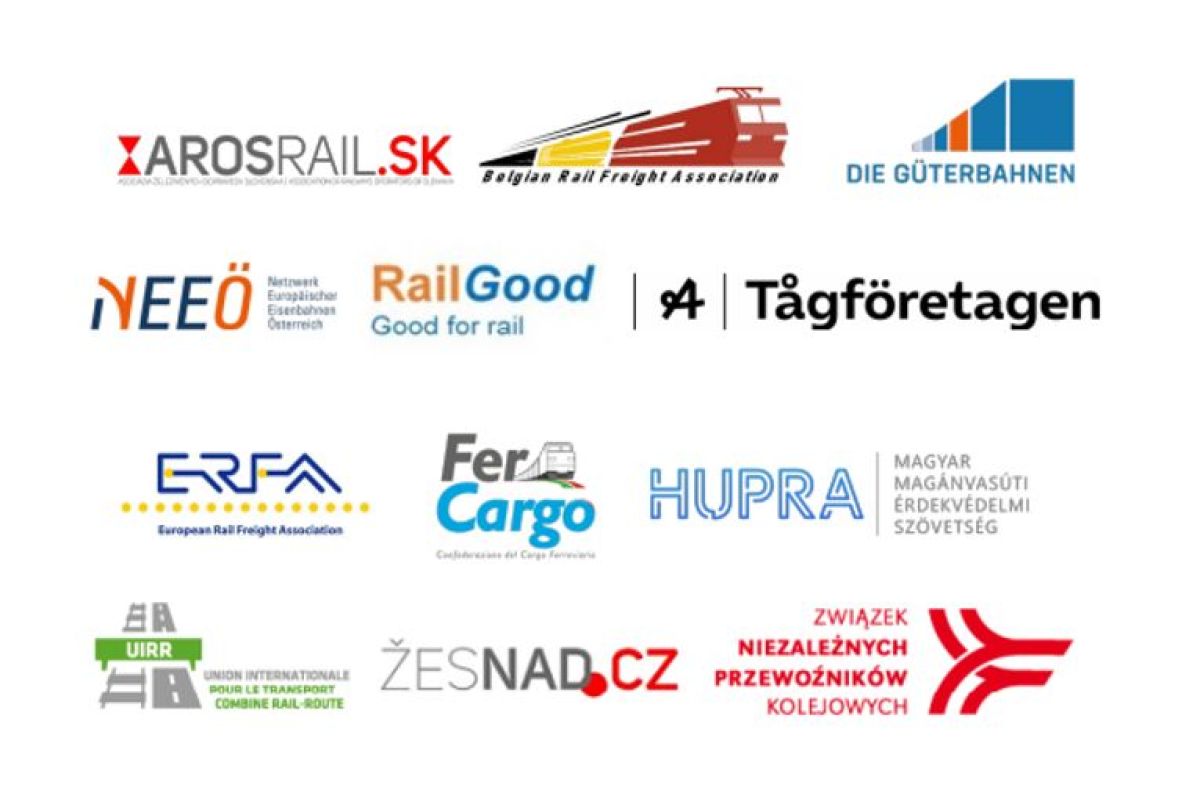
According to the letter, the Regulation will not achieve its objectives unless these gaps are addressed. The associations involved include AROSRAIL (Slovakia), BRFA (Belgium), DIE GÜTERBAHNEN (Germany), ERFA (EU), FerCargo (Italy), HUPRA (Hungary), NEEÖ (Austria), RailGood (Netherlands), Tågföretagen/ASTOC (Sweden), UIRR (EU), ZESNAD.CZ (Czech Republic), and ZNPK (Poland).