The Office of Rail Transport’s 2026 report The Future of Freight Transport puts a number on that gap: 74.8m tonnes of road freight could be addressed by rail, covering domestic road movements above 500 km and international flows above 1,000 km. That volume would equal more than one-third of Poland’s current rail freight market.
The figure is large, but the more important conclusion is structural. Poland is both a major rail freight country and Europe’s largest road freight performer by tonne-km. The modal shift opportunity is therefore not about replacing road transport. It is about taking the long trunk leg out of road-only supply chains and leaving road carriers to serve collection, distribution and terminal access.
Poland is a rail freight heavyweight, but road dominates tonne-km
Poland ranked second in Europe by rail freight mass in 2024, with 222.7m tonnes carried by rail. Germany remained first with 337.5m tonnes. In tonne-km, Poland generated almost 58bn tonne-km in 2024, while Germany reached 126.3bn tonne-km.
This means Poland’s railways carry substantial mass, but over shorter average distances. The average rail freight haul in Poland was 261 km in 2024, compared with 374 km in Germany. That difference matters because intermodal rail becomes more competitive as distance increases, while short-haul bulk and border operations limit average rail distance.
Road freight is much larger in transport work. On Polish territory, road freight generated 191.9bn tonne-km in 2023, more than three times the work performed by rail freight in Poland. Polish road carriers also generated 368.3bn tonne-km across reporting countries in 2024, equal to about one-fifth of EU road freight work.
The result is a dual market. Poland has one of Europe’s largest rail freight bases, but its logistics economy is still built around long-distance trucking.
The 75m-tonne opportunity sits in long-distance road flows
UTK’s estimate of 74.8m tonnes is not a general claim that rail can take over road freight. It is based on distance thresholds where rail has a clearer economic case: domestic road movements above 500 km and international road movements above 1,000 km.
The domestic component is 29.6m tonnes. This represented less than 2.5% of domestic road freight mass in 2024, but it generated 17.1bn tonne-km, or 13% of domestic road freight work. That ratio shows why distance is more important than tonnage when identifying modal shift candidates.
The international component is larger, at about 45m tonnes. These are flows where Poland trades by road with countries such as the Netherlands, France, Italy, Belgium, Spain and the UK. On these corridors, rail can potentially offer the trunk movement, while road remains necessary at both ends.
If the domestic long-distance segment alone moved to rail, UTK calculates that Polish rail freight mass would rise by 13.3%, while rail tonne-km would rise by 29.3%, based on 2024 data. The bigger increase in tonne-km confirms that the most attractive traffic is distance-heavy, not necessarily volume-heavy.
The best targets are not traditional bulk commodities
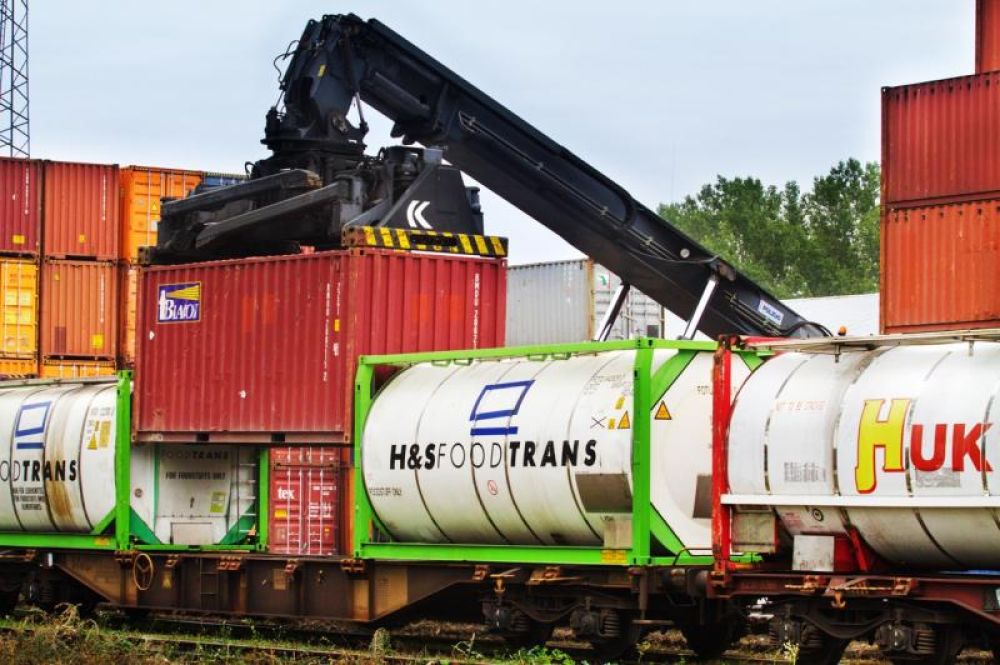
The report’s cargo tables point away from a classic bulk-only view of Polish rail freight. The main road-to-rail candidates include food products, chemicals, metals, wood products, mineral products, grouped goods, transport equipment and furniture.
In domestic road transport above 500 km, food products, beverages and tobacco were the largest category, at about 6.4m tonnes. Mineral products accounted for around 3.2m tonnes, chemicals and related products for 3.1m tonnes, metals for 2.8m tonnes, and wood and paper products for 2.7m tonnes.
These flows are relevant because many are regular industrial or retail movements. They can often be planned between factories, ports, warehouses, logistics parks and distribution centres. That gives rail a clearer commercial opening than in fragmented, time-critical spot traffic.
For international traffic, the pattern is similar. Imports from the Netherlands include food, agricultural products, grouped goods and chemicals. Italy sends metals and chemicals. France sends transport equipment and chemicals. Belgium combines food, chemicals and metals. Export flows from Poland to the Netherlands, France, Italy, Belgium and the UK include food products, chemicals, wood products, transport equipment and grouped goods.
The modal shift debate in Poland is therefore not only about coal, aggregates or steel. The larger opportunity lies in making rail visible and reliable for mainstream industrial and consumer supply chains.
Intermodal is the missing bridge
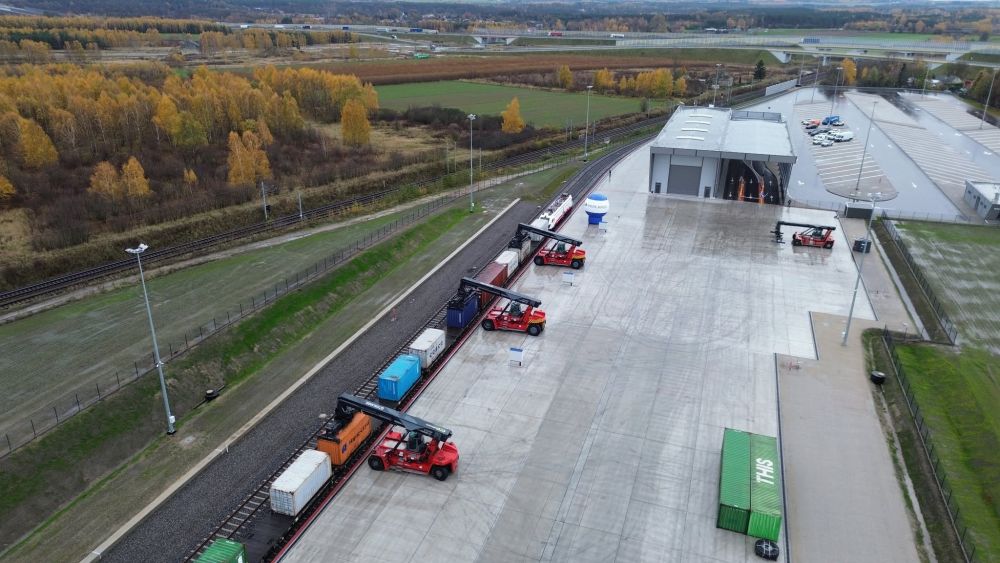
Poland’s intermodal rail market is growing, but it remains too small relative to the size of the road freight market. In 2024, Poland handled 27.6m tonnes of intermodal rail freight. Germany handled 99.9m tonnes.
The gap is wider in tonne-km. Intermodal represented 16.1% of Polish rail freight work in 2024, while in Germany it represented 43.5%. Germany’s intermodal rail work reached 54.9bn tonne-km, compared with 9.0bn tonne-km in Poland.
This comparison is important because Poland is not a small rail freight country. Its weaker intermodal position is not caused by lack of rail mass overall. It reflects the composition of the market and the limited integration of rail with road-based supply chains.
A rail freight market can look large in tonnes while still missing the flows that define modern logistics. Poland fits that pattern.
The semi-trailer gap is the clearest operational failure
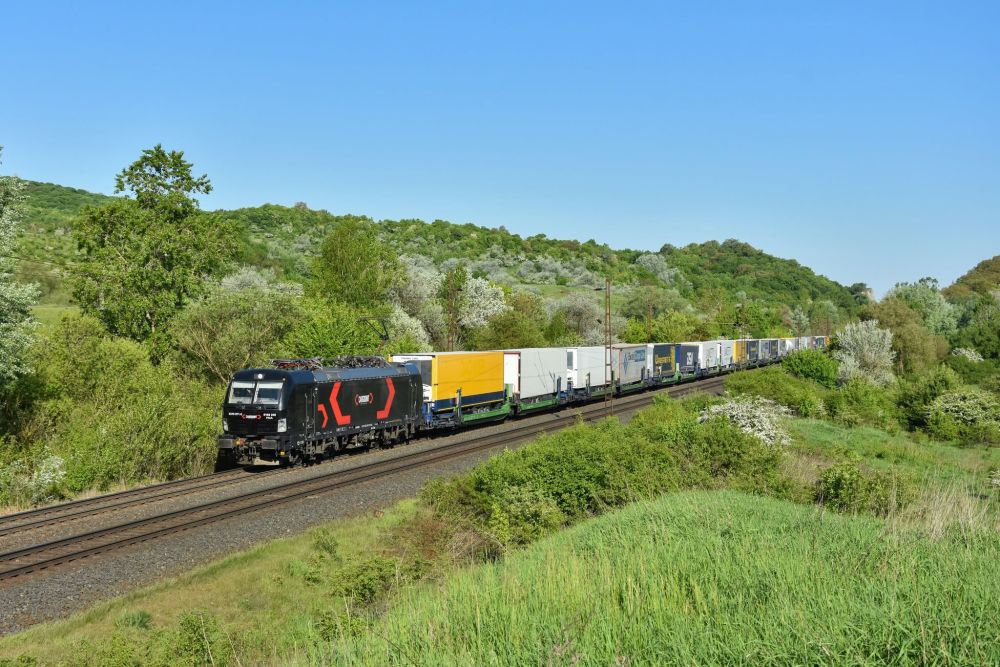
The strongest single statistic in the report may be the semi-trailer figure. In Poland, trailers and semi-trailers accounted for only 3.8% of intermodal units and 5.3% of intermodal mass in 2024. In Germany, semi-trailers accounted for 28.6% of intermodal mass.
This is the practical bottleneck behind much of the modal shift discussion. Poland has a large road haulage sector, but rail does not yet offer a comparable semi-trailer product at scale. Containers dominate Polish intermodal rail, while standard road trailers remain mostly outside the rail system.
The problem is not only Polish. UTK cites the wider European equipment barrier: around 90% of road semi-trailers in Europe are not craneable, while wagons suitable for horizontal loading and RoLa operations account for only 1–2% of the European intermodal wagon fleet.
This makes technology choices central. CargoBeamer, Modalohr, Helrom’s Megaswing, Nikrasa and r2L connector or new Tatrvagónka pocket wagon with integrated basket all address the same issue: moving standard or non-craneable road trailers by rail without waiting for the entire European trailer fleet to be replaced.
For Poland, the semi-trailer issue is not a technical niche. It is the point at which rail either connects to the dominant road freight model or remains outside a large part of the market.
External costs change the economics
The report’s external-cost data puts the road-rail comparison in a wider economic frame. At EU level, road freight generated EUR 95.6bn in annual external costs in 2022, compared with EUR 4.3bn for rail freight.
For Poland, UTK estimates EUR 16.87bn in annual external costs for road freight and EUR 0.4bn for rail freight. Heavy goods vehicles account for most of the road total, at EUR 14.12bn. Light commercial vehicles add EUR 2.75bn.
Congestion is the largest road freight cost category in Poland, at EUR 6.64bn. Accidents account for EUR 2.70bn, noise for EUR 2.81bn, climate costs for EUR 2.25bn, air pollution for EUR 1.78bn, and well-to-tank emissions for EUR 0.68bn.
Rail’s cost structure is much lower. UTK estimates EUR 0.29bn in external costs for electric freight trains and EUR 0.11bn for diesel freight trains. The difference is especially relevant for long-distance freight, where the trunk movement generates large tonne-km and therefore large cumulative impacts when handled by road.
These numbers do not remove the commercial barriers faced by rail operators and shippers. They show that the public cost of the current freight structure is much higher than the private transport price suggests.
Capacity is the first constraint after demand
The 74.8m-tonne figure should not be read as immediately available rail traffic. UTK’s own analysis shows that transferring the domestic long-distance road segment alone would increase rail freight tonne-km by almost 30%. That would place additional pressure on network capacity, terminal capacity, train paths, punctuality and rolling stock availability.
This is where modal shift becomes an infrastructure question. If rail is to take more long-distance freight, it needs reliable paths on the main corridors, efficient access to ports and terminals, and sufficient capacity around industrial regions and border crossings.
Poland’s position on TEN-T corridors gives it a strong geographic role, but the report also notes bottlenecks and the impact of additional Ukraine-related flows on network resilience. Rail cannot capture road traffic simply because the distance is suitable. It must offer dependable service in the same logistics environment in which road transport operates.
The market test is therefore not whether cargo exists. It is whether rail can handle it with the reliability expected by shippers.
Digitalisation is now a commercial requirement
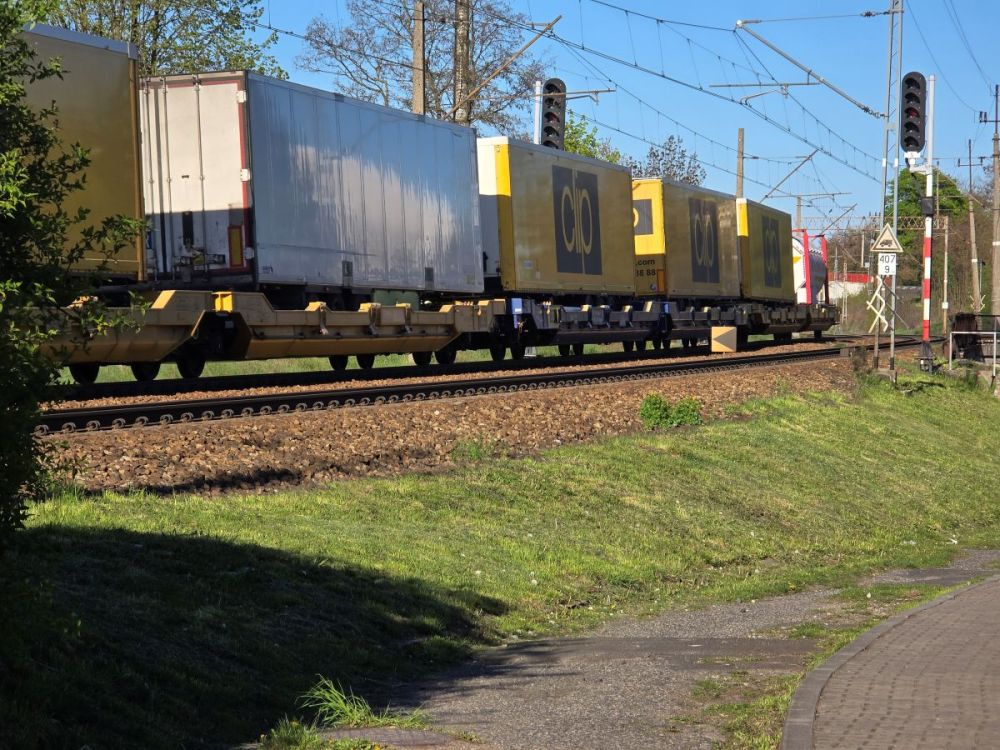
UTK draws a sharp contrast between road and rail digitalisation. Road freight already uses freight exchanges, telematics, transport management systems, digital documentation and real-time tracking at scale. Rail freight still relies more heavily on bilateral arrangements, manual processes and limited transparency on price, capacity and availability.
That difference affects sales. A shipper or forwarder can find road capacity quickly through digital platforms. Rail is often less visible, even when it could be competitive on cost or emissions. This is a commercial weakness, not just an IT issue. Solutions such as Railvis offer the way out of this neglected area in freight rail.
The report points to multimodal platforms as one answer. These systems would allow shippers to compare road-only transport with combined rail-road options in one planning environment. UTK cites the FOR-FREIGHT project, where a Valencia–Madrid multimodal option cut greenhouse gas emissions by 47.79% compared with road-only transport.
For Poland, digitalisation also includes predictive maintenance, real-time rolling stock monitoring, cloud-based operational systems, AI-supported driving advice and eventually digital automatic coupling. These tools matter because modal shift requires reliability, visibility and faster operational response.
Rail cannot win long-distance logistics contracts only by being more energy-efficient. It must be bookable, trackable and comparable.
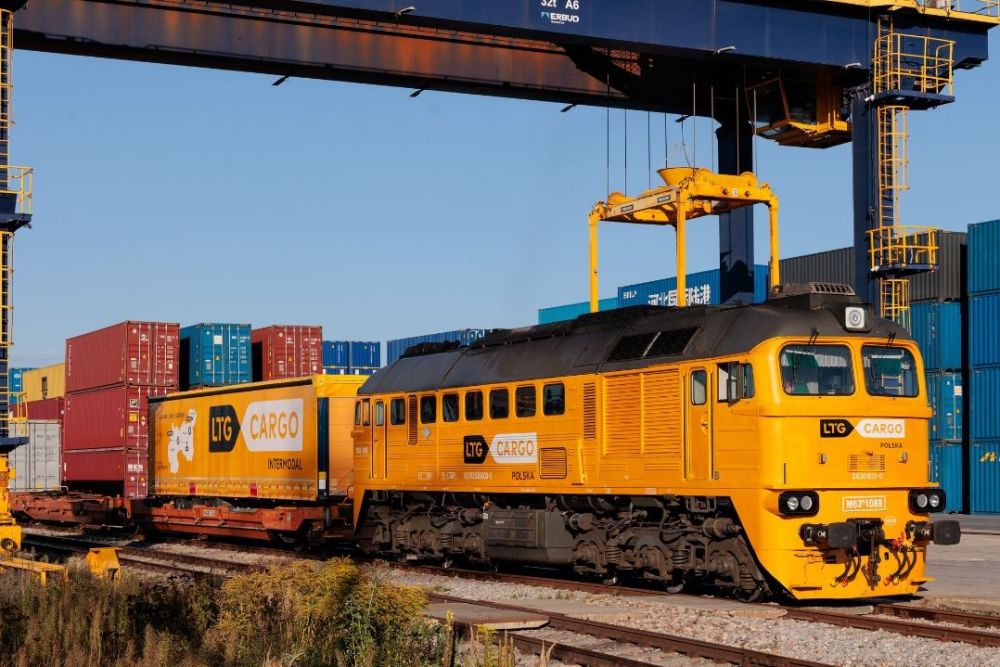
Rail in co-modal system with road
A recurring weakness in modal shift debates is the framing of road and rail as opposing sectors. UTK’s report takes a different view. It describes a co-modal system in which rail handles the long-distance trunk movement and road transport handles the first and last mile.
This distinction is important in Poland because the road freight sector is economically strong and deeply integrated into European logistics. Polish hauliers are not a marginal group that can be bypassed. They are the operators that would need to feed terminals, move semi-trailers, serve distribution centres and provide flexible capacity around rail trunk services.
The report also notes that consultations with road transport organisations did not show a simple anti-rail position. The road sector’s concerns are more practical: service quality, terminal access, flexibility, regulation and the division of responsibilities in a combined transport chain.
This suggests that the main barrier is not ideological. It is whether rail-road services can be made operationally attractive for companies that already know how to run road-only logistics.
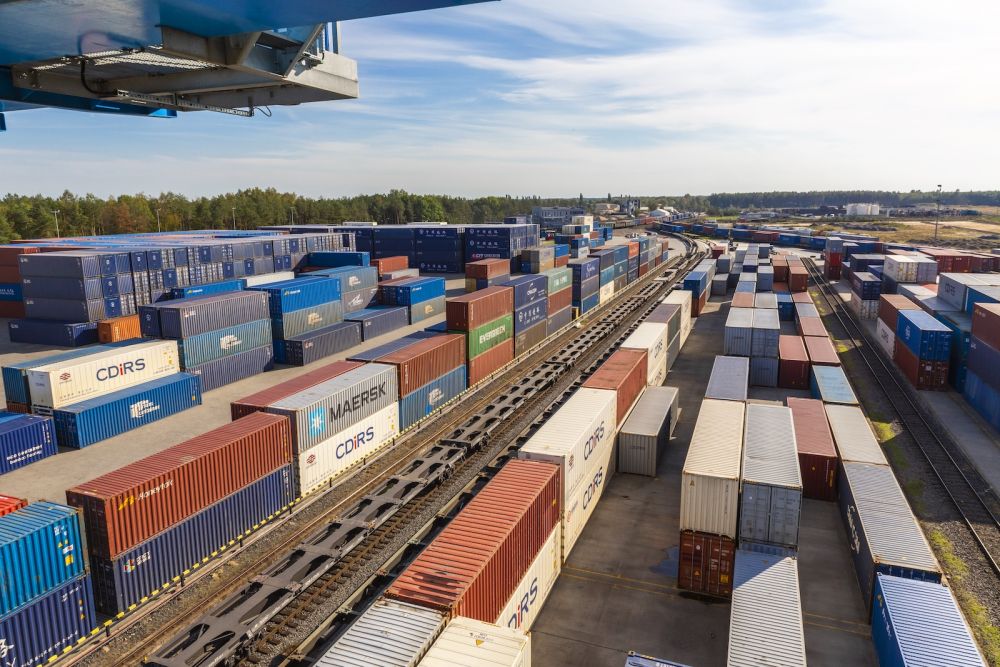
Poland’s comparison with Europe shows the direction of travel
The report uses Germany, Austria, Switzerland, Italy, France and the UK as reference points. Germany shows the scale that intermodal rail can reach inside a large industrial economy. Austria and Switzerland show how policy and infrastructure can move road freight onto rail through alpine corridors. Italy and France show the role of terminals and transhipment technology.
Poland differs from these examples because it combines a large rail freight market with an exceptionally large road freight sector. That creates a different challenge. Poland does not need to prove that rail freight can exist at scale; it already does. It needs to connect rail freight with the road-based logistics flows that now generate the highest tonne-km.
The German comparison is particularly useful. Poland carried around two-thirds of Germany’s rail freight mass in 2024, but its intermodal rail work was far smaller. That implies a development path based less on total tonnes and more on service type, distance, trailer handling and terminal integration.
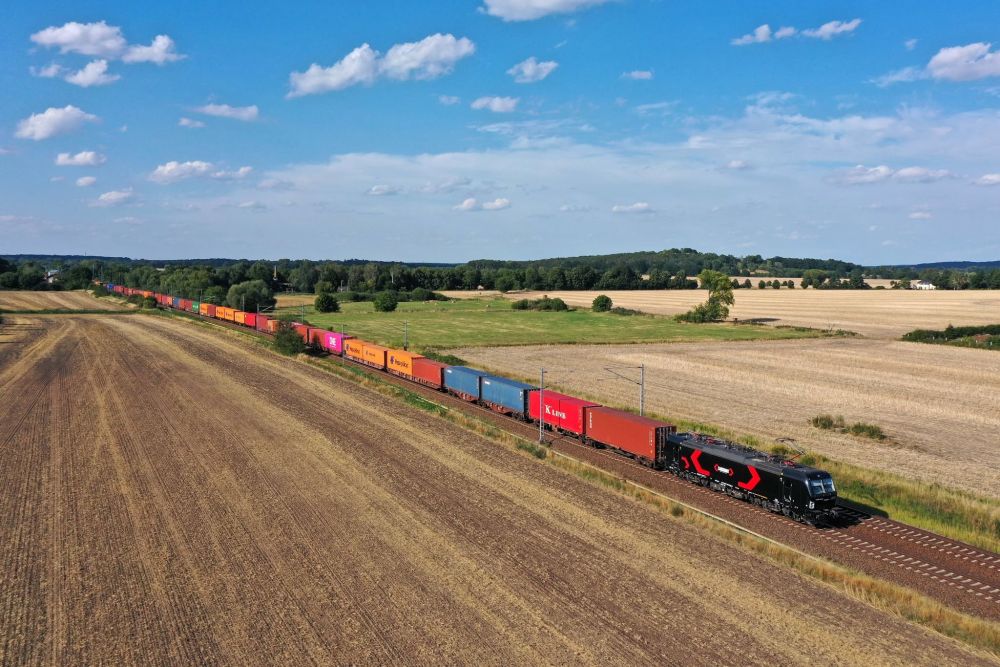
The practical ending: target corridors, not the whole road market
The report’s data supports a selective strategy. The strongest candidates for rail are not all road flows, but repeatable movements above 500 km domestically and above 1,000 km internationally. The priority cargoes are food products with suitable handling requirements, chemicals, metals, wood and paper products, grouped goods, transport equipment and selected consumer goods.
The priority operating model is also clear: rail for the trunk leg, road for the terminal legs, with semi-trailer handling and digital booking as core requirements. Without those elements, the 74.8m-tonne figure remains an addressable market rather than a captured market.
Poland’s freight shift problem is therefore not demand. The demand is visible in the road statistics. The problem is conversion: turning identifiable long-distance road flows into rail-road services that shippers can buy, road carriers can feed, terminals can process, and infrastructure managers can path reliably.