This projection, presented by Future Market Insights, is based on a compound annual growth rate of 5.0% from 2025, represents a continued expansion of rail's role in international and domestic freight logistics. Starting from a baseline of EUR 348.5 billion (USD 370.0 billion) in 2025, the industry will see consistent annual increases in cargo volumes and service revenues across all major markets.
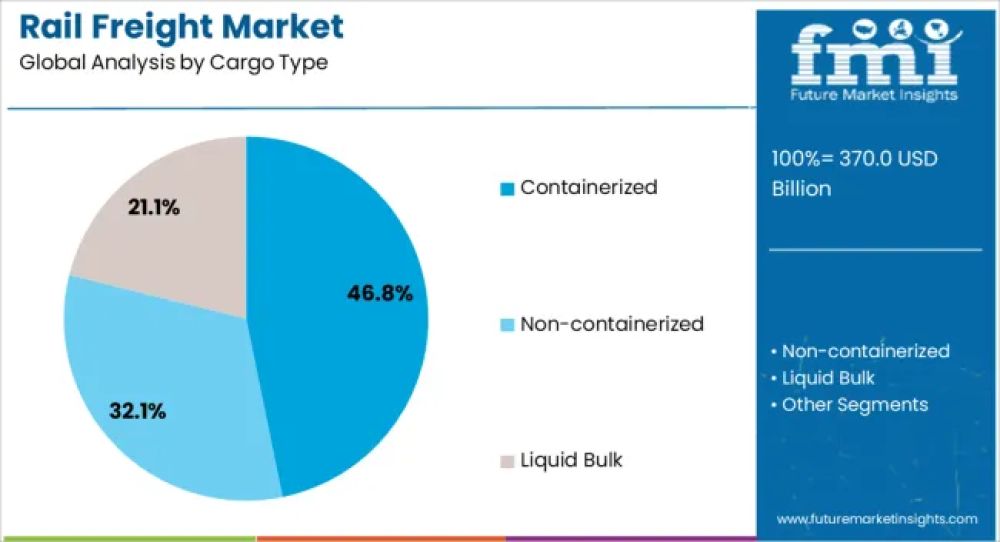
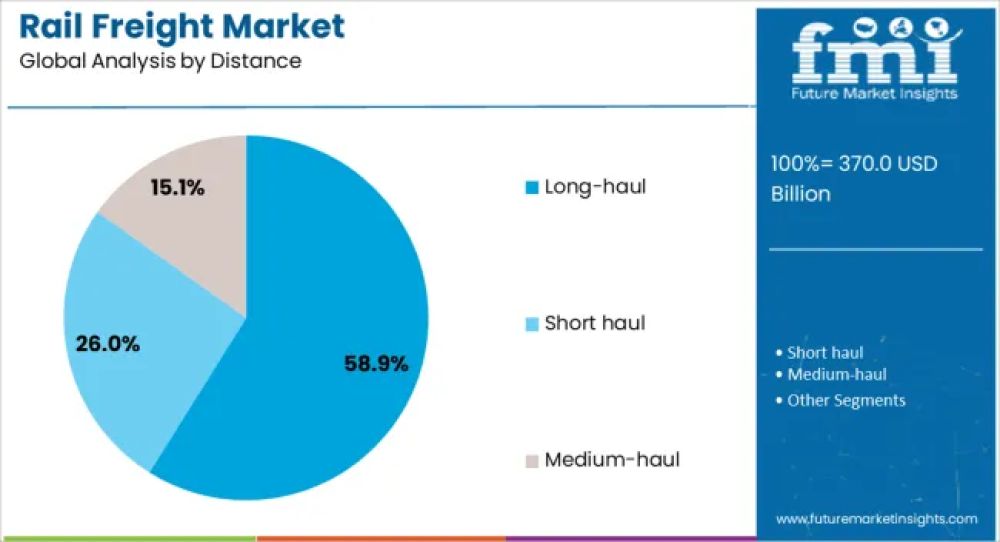
The forecast trajectory reflects sustained reliance on rail for the movement of bulk commodities, containerised cargo, and long-haul logistics flows. Segmental analysis for 2025 shows that containerised freight will retain a leading share at 46.8% of total market revenue. Full carload (FCL) services are projected to be the dominant service type, accounting for 52.4% of market value. Long-haul freight, which continues to benefit from cost efficiency and lower environmental impact compared to road transport over similar distances, is estimated to generate 58.9% of market revenue.
Containerisation and full carload services to remain dominant
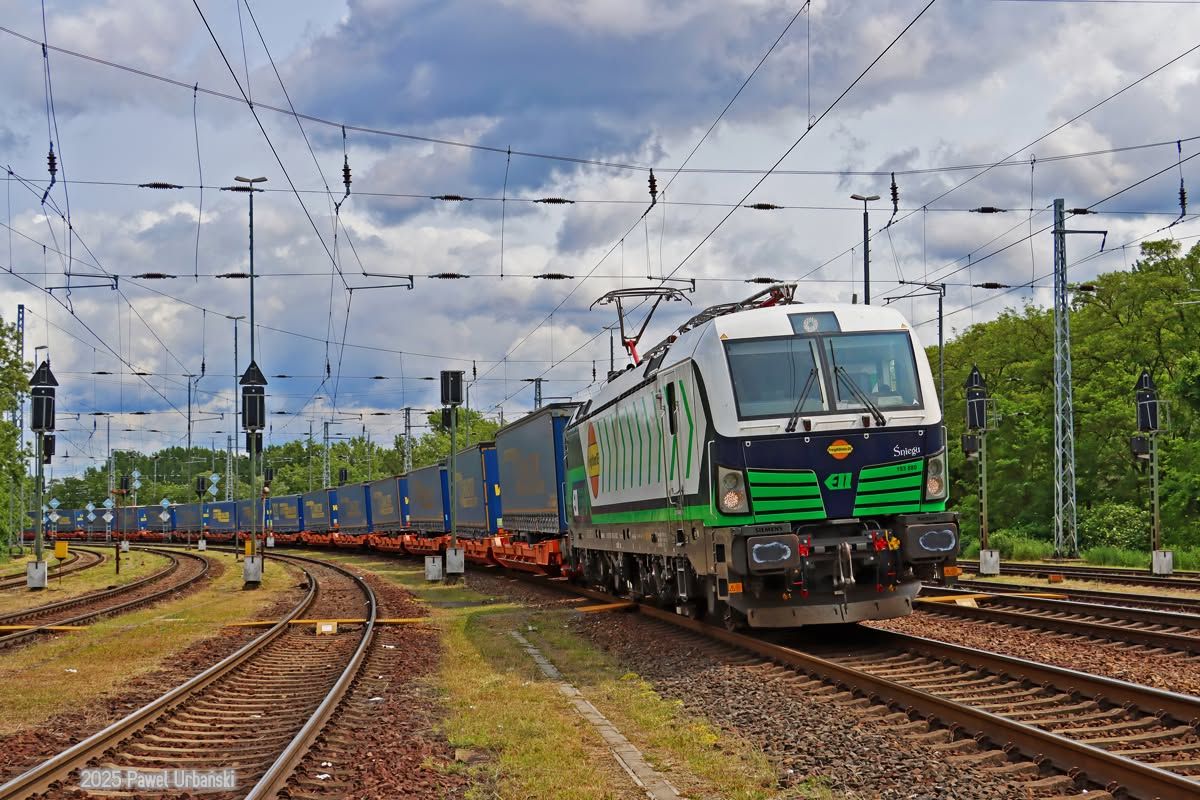
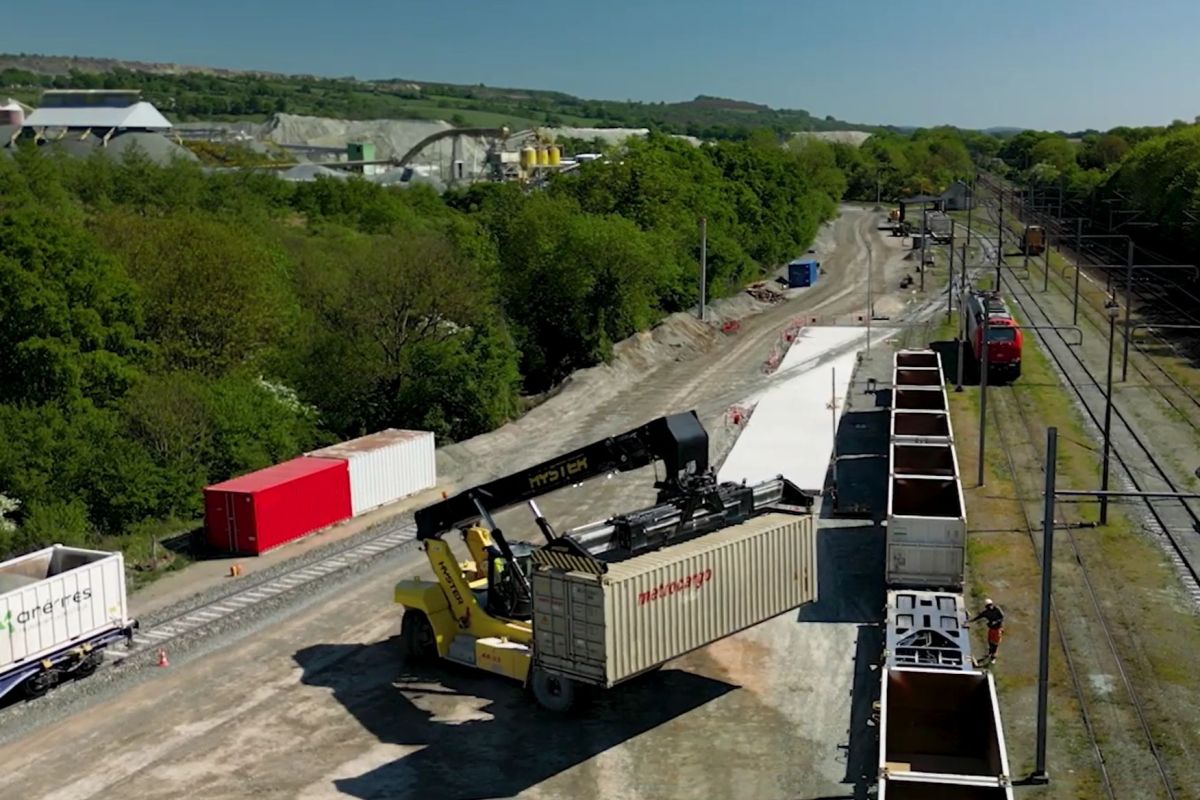
Rail’s compatibility with containerised logistics continues to support its integration with seaport and inland terminal operations. The widespread use of standard containers and the growth of intermodal shipping are reinforcing this segment’s stability. Rail operators in multiple regions have developed inland hubs that allow for the seamless transfer of cargo between maritime, road, and rail modes. These facilities support reliable connections over long distances, particularly in sectors such as manufacturing, retail, and automotive, where time-sensitive and high-volume deliveries are standard.
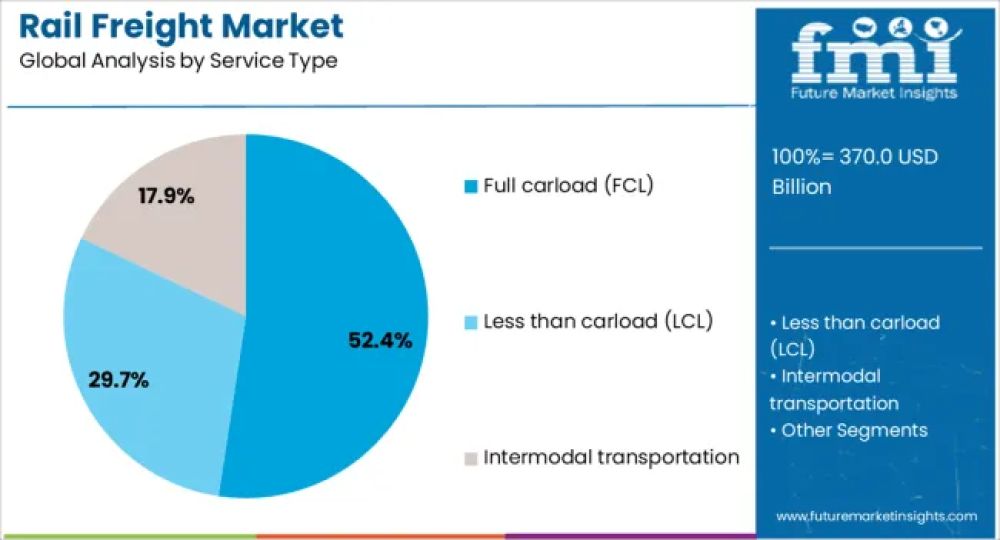
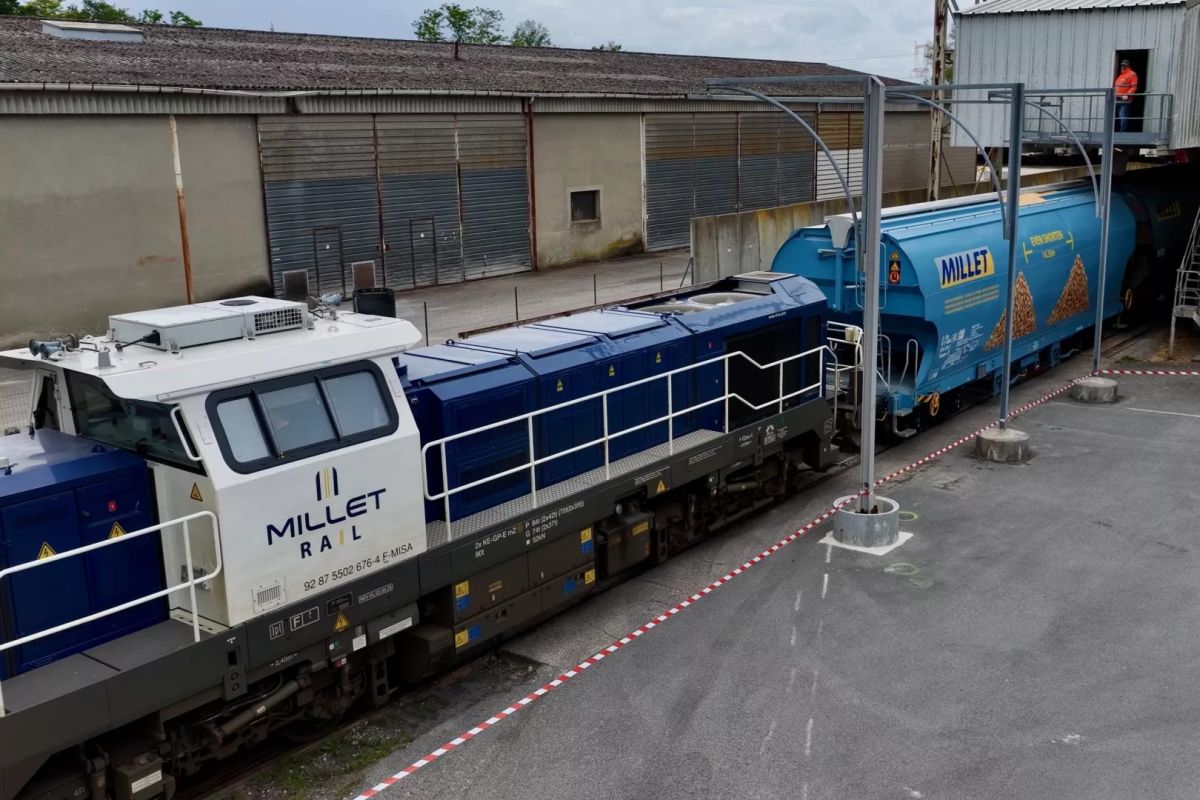
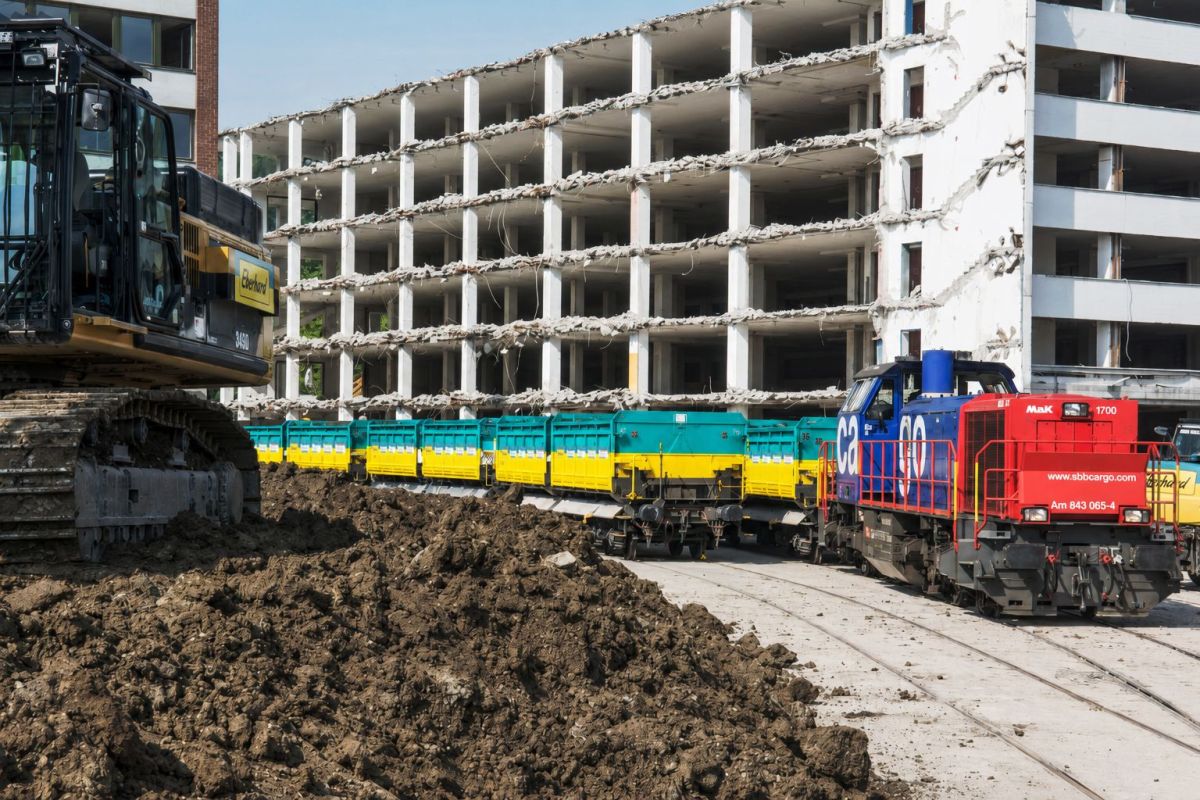
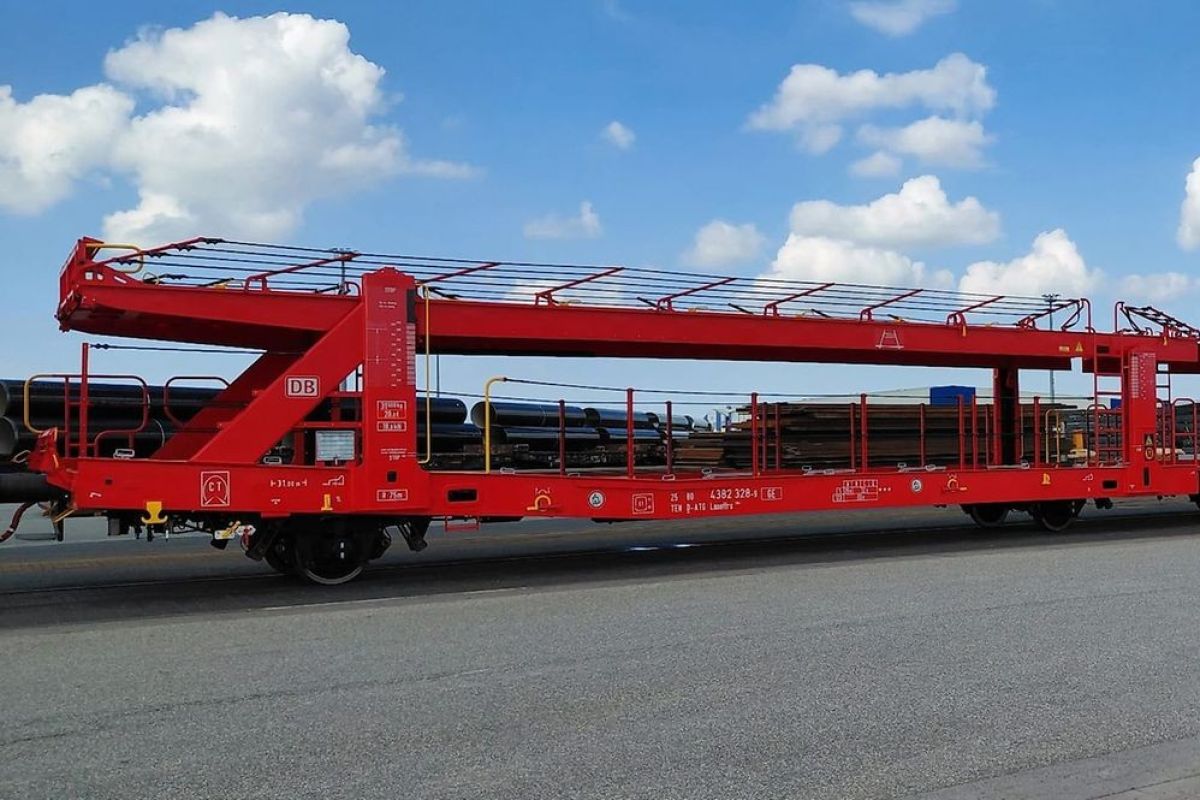
At the same time, full carload services remain widely used by industries transporting bulk goods such as minerals, chemicals, agricultural products, and energy-related materials. These services enable shippers to contract entire wagons, simplifying logistics and reducing the need for intermediate handling. Rail operators have tailored their networks to support FCL customers with dedicated assets, including purpose-built rolling stock and loading infrastructure, often structured around long-term contracts that support predictability and cost control.
Regional outlook: Asia leads, Europe and North America sustain
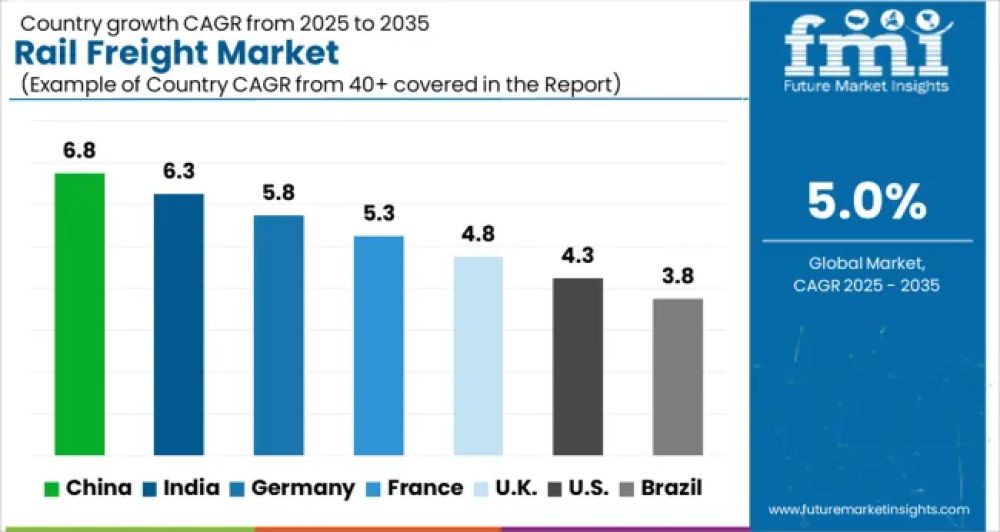
Among the strongest growth markets, China is projected to lead with a Compound Annual Growth Rate (CAGR) of 6.8%. Rail development in China is driven by national infrastructure projects such as the Belt and Road Initiative, expansion of interprovincial links, and ongoing upgrades in electrification and signalling. The integration of logistics technologies—particularly automated tracking and double-stack container operations—is also contributing to higher throughput.
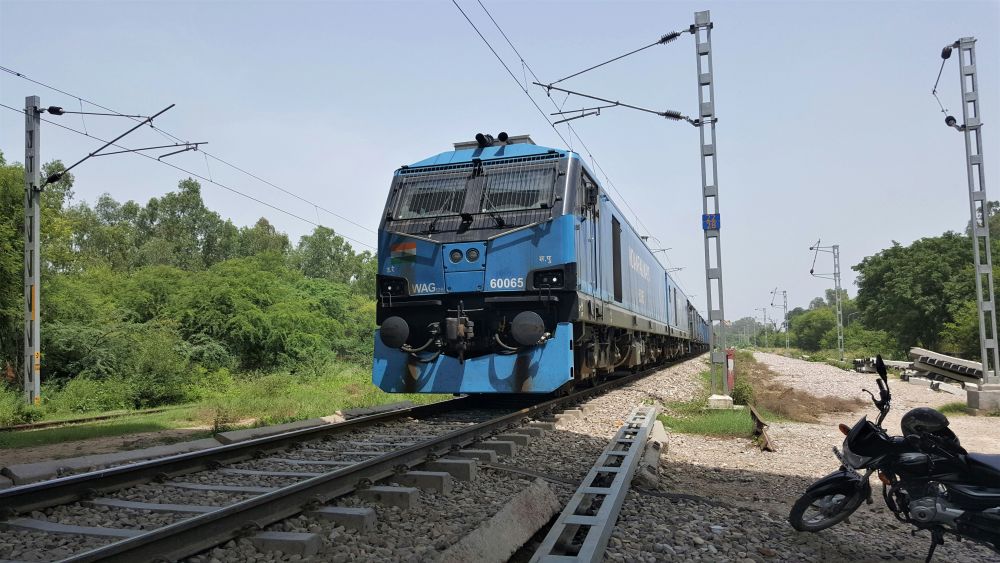
India follows closely with an expected CAGR of 6.3%, supported by the Dedicated Freight Corridors (DFCs) and a growing logistics sector. These corridors aim to divert freight from congested passenger lines, offering higher axle loads and faster transit for industrial cargo. New inland logistics parks and rail-port connections are further increasing competitiveness against road haulage.
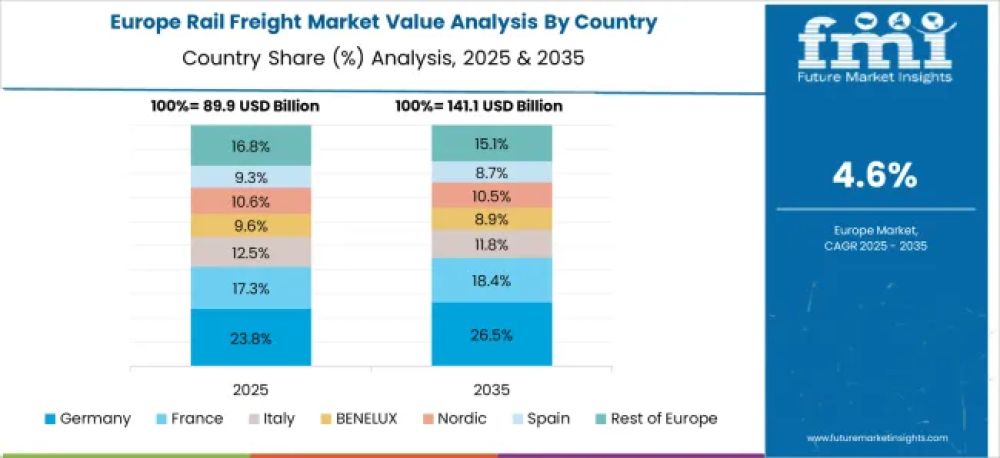
Germany remains the top growth country in Europe, forecast to reach a 5.8% CAGR. The country’s position as a logistics hub within the EU, combined with support for green freight corridors and digital yard management systems, sustains demand across major sectors. EU-funded projects under the TEN-T programme have also advanced cross-border network integration.
In the UK, projected growth at 4.8% is supported by stable demand for aggregates and containerised freight. Network challenges and modal competition limit faster growth, though investments in terminal infrastructure and digital visibility platforms are increasing rail’s share in certain corridors.
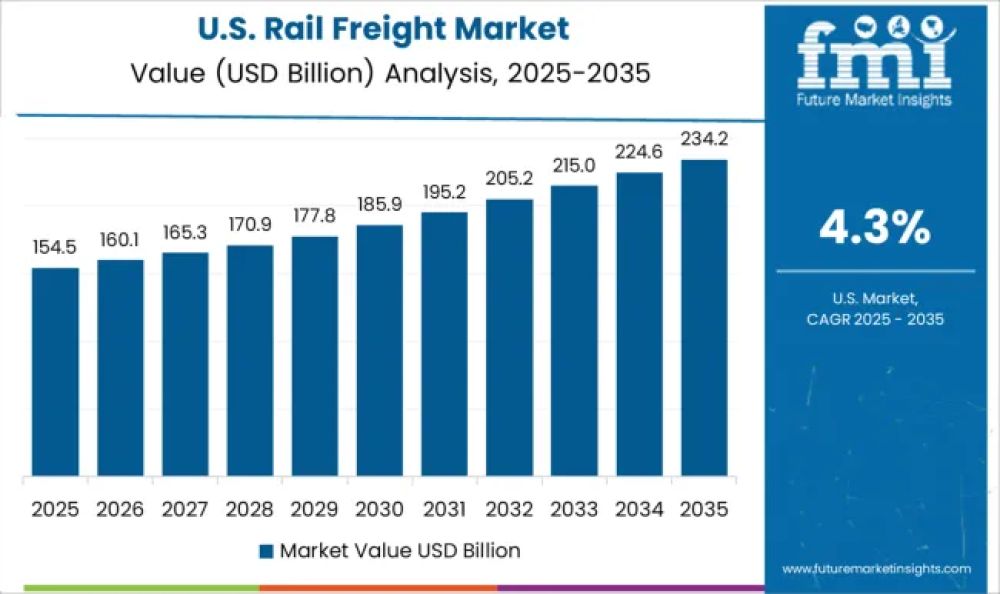
The United States is projected to grow at 4.3% over the period, with Class I railroads focusing on service efficiency through precision scheduled railroading and investments in track upgrades. Intermodal freight, particularly between coastal ports and inland hubs, remains a major contributor, though competition with road transport and infrastructure limitations continue to affect overall expansion potential.
Market Drivers and Constraints
Drivers of rail freight demand include growing trade volumes, sustained industrial output in key regions, and the continued adoption of intermodal logistics systems. Rising fuel prices, emissions regulations, and road congestion have also pushed shippers to consider rail as a viable alternative for long-distance transport.
Infrastructure investment has played a central role in this trend. Electrification projects, double-track corridors, and advanced yard management systems have increased capacity and reduced transit times. Real-time tracking platforms and digital scheduling tools are improving reliability and service transparency—key factors for logistics managers handling time-sensitive goods.
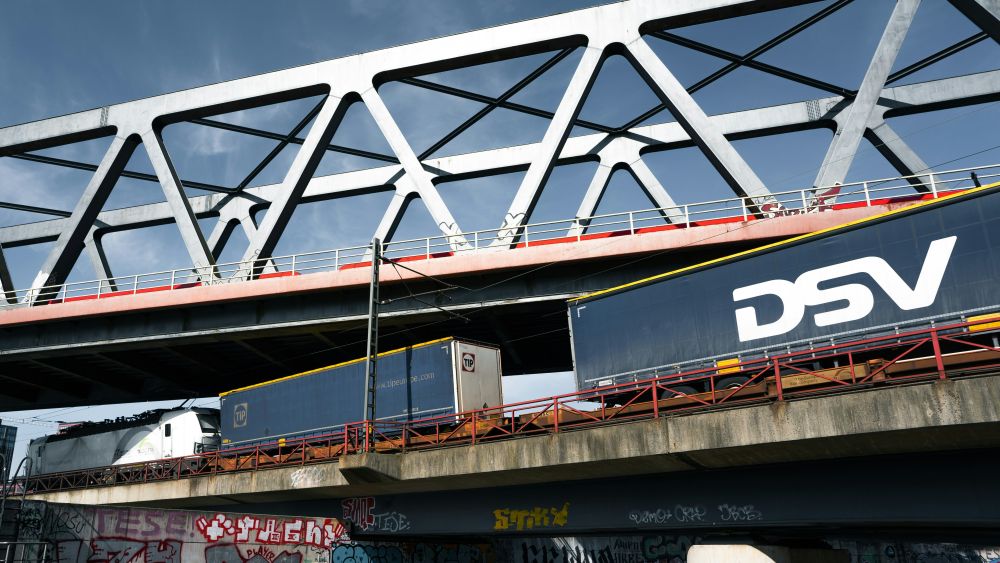
However, the rail freight market is not without limitations. In many countries, freight trains must share infrastructure with passenger services, creating scheduling conflicts and constraining capacity. Regulatory differences, particularly for cross-border operations, can delay movements and add costs. Rail also faces strong competition from road transport, which provides greater route flexibility and better last-mile delivery options.
Additionally, high capital requirements for rolling stock and infrastructure upgrades pose risks for operators, especially in regions with fluctuating demand or limited access to financing. Balancing long-term investments with operational profitability remains a challenge for both private and state-backed operators.
Competitive landscape and market structure
The global market remains dominated by a small number of large, vertically integrated operators. Entities such as Union Pacific, BNSF, Canadian National, DB Cargo, China Railway, and SNCF Logistics manage vast rail networks, intermodal terminals, and logistics hubs. Their control over infrastructure enables service integration across entire supply chains, offering predictable delivery windows and asset management capabilities.
Smaller regional players tend to focus on niche routes or underserved corridors. Some operate as rail logistics providers without owning rolling stock or infrastructure, offering flexibility in cost and service models. Others act as feeders, linking smaller industrial zones or rural areas to the main rail network.
Technology is becoming a competitive differentiator. Investment in predictive maintenance, automated inspection systems, and route optimisation algorithms is allowing operators to improve asset utilisation and service delivery. Environmental performance has also emerged as a factor, with railways introducing fuel-efficient locomotives, hybrid traction, and carbon tracking tools to meet customer and regulatory expectations.
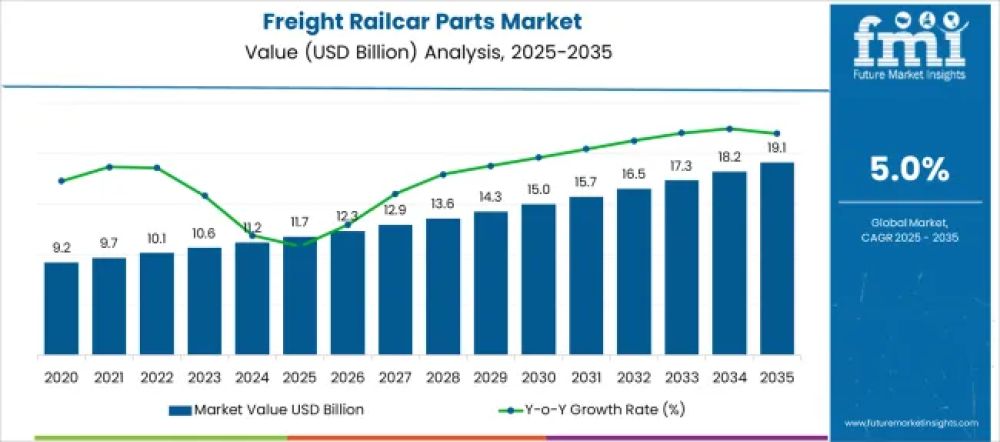
These figures reflect stable year-on-year growth and an ongoing reliance on rail as a central pillar in national and transnational supply chains. As multimodal logistics continues to expand and environmental constraints shape modal decisions, rail freight is expected to retain a central role in industrial and commercial cargo movement strategies.