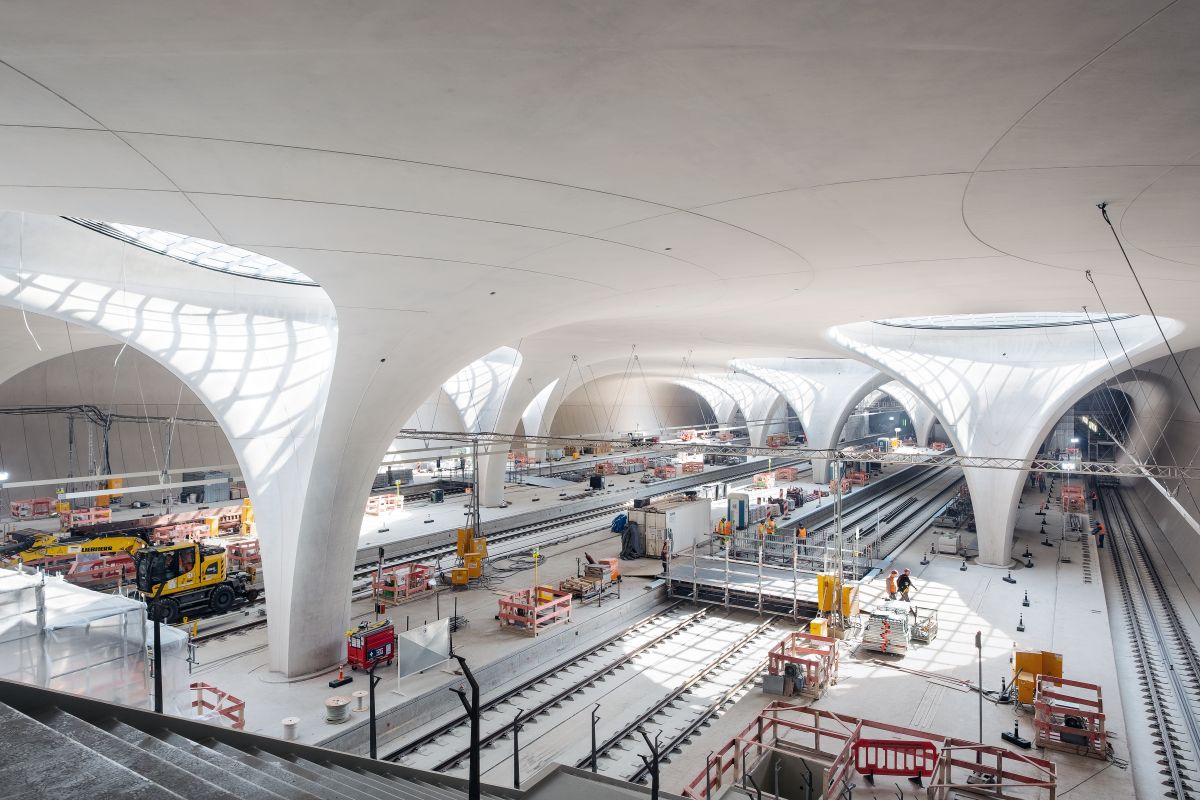
The project will now enter operation in five stages between December 2027 and December 2033, replacing the previous timetable based on a 2026 opening.
According to Deutsche Bahn, the internal audit found shortcomings in project processes, controls, coordination and risk management. It concluded that the planned commissioning date at the end of 2026 was not realistically achievable.
“To put it clearly: I am shocked by the findings of the internal audit,” said DB CEO Evelyn Palla. “The results are deeply concerning not only for me, but also for the public, particularly the people of Stuttgart and the railway employees who work for our customers every day.”
The first stage, in December 2027, will provide shorter pedestrian routes through the historic Bonatz building and across the roof of the future station. Shops and passenger facilities in the building are expected to open during 2028.
The new long-distance station at Stuttgart Airport is scheduled to open in December 2030, initially serving regional trains towards Reutlingen, Tübingen and Ulm.
The new underground Stuttgart Hauptbahnhof is planned to enter service in December 2031. Long-distance trains and most regional services will then use the through station, while trains from the Bad Cannstatt direction will continue using the existing terminus until mid-2032.
The extended and digitalised S-Bahn trunk route, including the new Mittnachtstraße/Rosenstein stop, is due to open in July 2032. The final stage will follow in December 2033 with the commissioning of the Pfaffensteig Tunnel, connecting the Gäubahn to Stuttgart 21 via the airport.
The revised schedule increases the projected cost of Stuttgart 21 by around €3 billion, bringing the total forecast to €14.5 billion. DB attributed the increase mainly to remaining commissioning works, more complex digital signalling, insufficiently mature planning and the need to redesign parts of the power supply.
“We did not meet expectations for earlier opening dates, and I deeply regret that,” Palla said. “The new management has prepared a plan that no longer relies on unrealistic assumptions.”
DB is also restructuring the project organisation. Responsibility for commissioning will be concentrated within DB Projekt Stuttgart-Ulm, while risk management, escalation procedures and coordination with DB InfraGO and project partners will be revised.