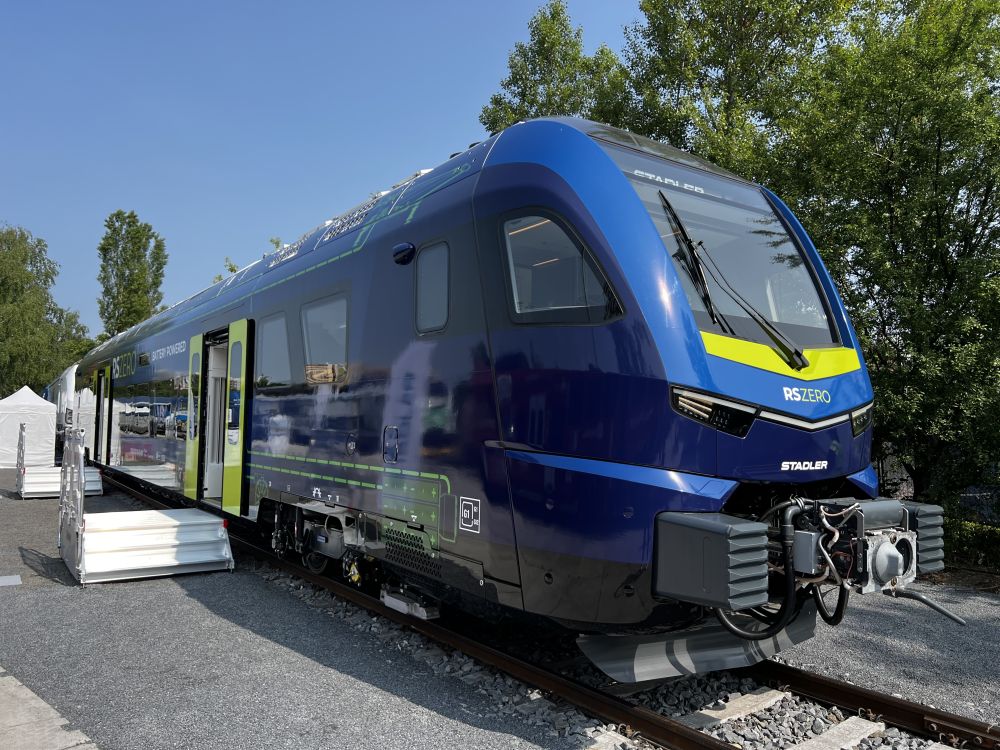
At Rail Business Days in Ostrava 2025, Stadler exhibited its RS ZERO trainset for the first time in Central Europe. Czechia is the second country after Germany where the train has been showcased publicly. The model is designed as a successor to the RegioShuttle RS1 and is aimed at regional routes with lower traffic demand, especially those not fully electrified.
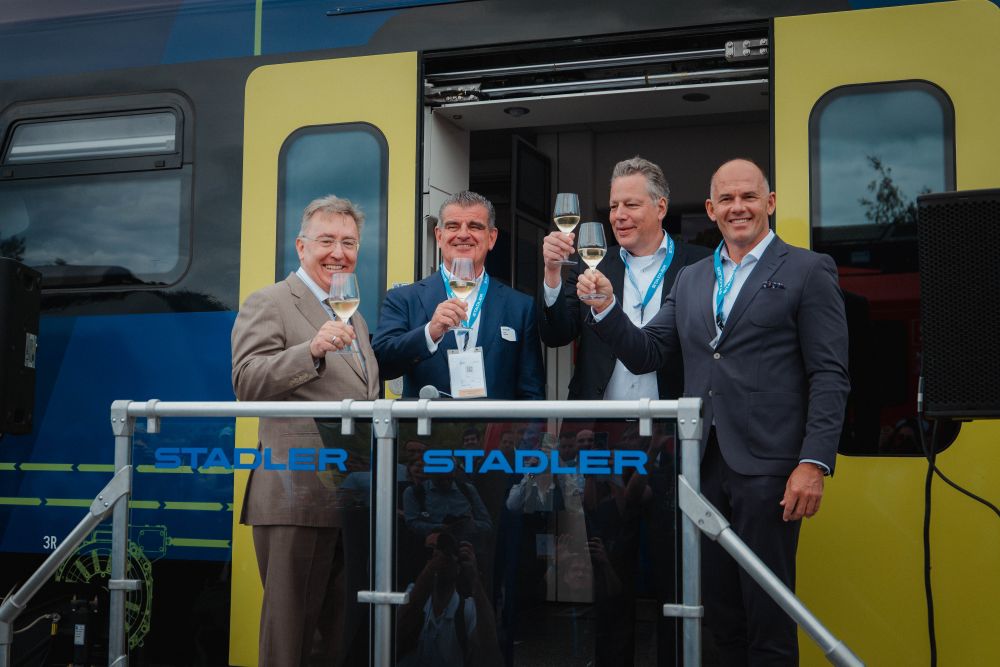
As Ansgar Brockmeyer, Executive Vice President Sales & Marketing Deputy Group CEO of Stadler Rail said during the presentation, „All customers using RS1 units were asking what the next step is once lifetime of these vehicles is reached. We wanted to create something that looks the same, feels the same, but is emission-free. “
Capable of burning “colorful” hydrogen
The competitive advantage of the RS ZERO hydrogen train is the fact that it has a combustion engine. This differentiates the train from its competitors, which are using hydrogen cells, requiring H2 purity of 99%. RS ZERO can burn all sorts of hydrogen sources – not only green, but also so called grey and other types of hydrogen with its purity only required to be at 95%. This broadens the hydrogen sourcing significantly and enables the operators to reduce fuel costs.
Technical characteristics
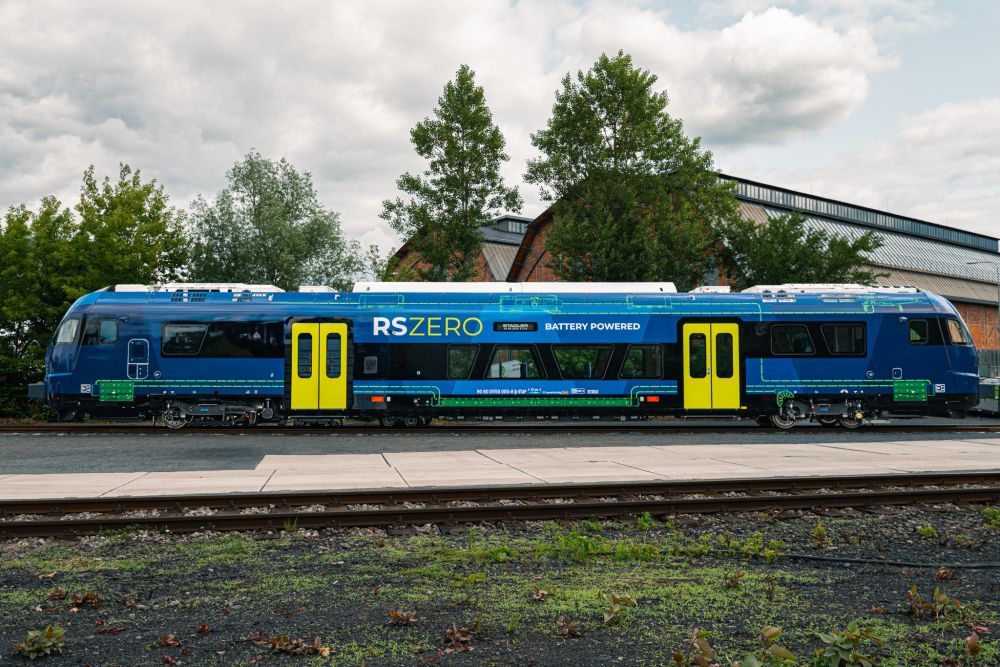
The RS ZERO offers a fully decarbonized propulsion system and is available in both single and double-car configurations. It has a maximum seating capacity of 165 passengers. The unit can operate up to 150 km on battery power or up to 800 km using hydrogen. Its hybrid drive system is intended to provide emission-free or low-emission service depending on the operating environment.
Czech rail infrastructure
Czechia operates a dense rail network, with about 35% currently electrified. The remaining portion of the network relies on diesel-powered vehicles, many of which are aging and subject to eventual replacement. RS ZERO is positioned as a candidate for these operations.
Stadler's presence in Czechia
Stadler Praha has operated in the country since 2009. The company currently employs over 250 engineers, having started with a team of 30. The Prague-based subsidiary contributes to rail vehicle development through design, systems integration, and homologation services, and maintains partnerships with Czech technical universities.
Stadler’s zero-emission portfolio
Stadler reports having delivered 299 zero-emission vehicles to date, including 271 battery-electric FLIRT Akku units and 28 hydrogen-powered FLIRT H₂ trains. The FLIRT Akku holds a Guinness World Record for battery range at 224 km, while the FLIRT H₂ achieved 2,803 km without refueling.
The RS ZERO expands Stadler's offer in the field of alternative drives, targeting regional operations on railways with incomplete or absent electrification.