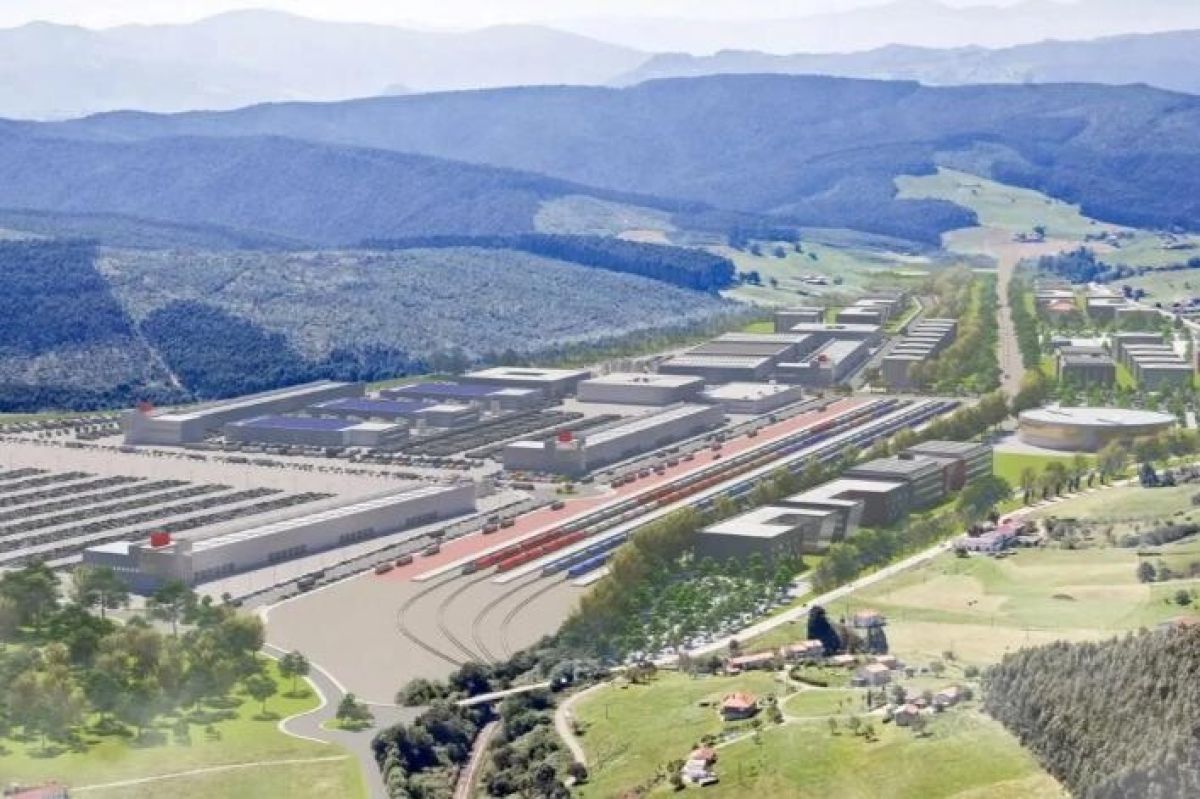
Romania is preparing a 781.9 km high-speed rail corridor from Constanța to the Hungarian border, with estimated capital expenditure of EUR 14.93bn, according to an opportunity study completed in December 2025 and presented by Profit.ro.
The proposed alignment runs Constanța – Bucharest – Brașov – Sighișoara (Vânători) – Târgu Mureș – Cluj-Napoca – Zalău – Oradea – border with Hungary, linking to the planned Hungarian high-speed network and forming part of the TEN-T core network. Average investment costs are estimated at around EUR 19m per kilometre.
The hybrid scenario provides modernisation of existing lines to 160–200 km/h and construction of new infrastructure for 200–250 km/h operation. Mountain sections such as Câmpina–Predeal–Brașov could use combined high-speed and conventional routes, including the planned Predeal tunnel, for which technical and economic documentation has been approved.
Implementation is structured in phases. Phase one covers Bucharest–Câmpina with a new double-track line for 250 km/h, potentially including Câmpina–Brașov upgraded to 200 km/h. A tender for works on the Predeal–Brașov section, including the Predeal tunnel designed for 200 km/h, is expected in 2026.
Phase two foresees a new 250 km/h double-track line between Brașov and Cluj-Napoca via Târgu Mureș. Phase three covers Cluj-Napoca–Oradea via Zalău, also as a new 250 km/h line. Phase four includes upgrades to 200 km/h between Bucharest and Fetești and a new 250 km/h double-track line from Fetești to Constanța.
The strategic study was prepared by the international consortium Atkins Réalis under an eight-month contract starting in October 2024. The study assessed technical, investment and operational requirements, economic and financial feasibility, and institutional steps required for implementation. It recommends phased delivery, deployment of ERTMS/ETCS Level 2 and long-term multiannual financing after 2027 through European funds, the state budget and potentially public-private partnerships.