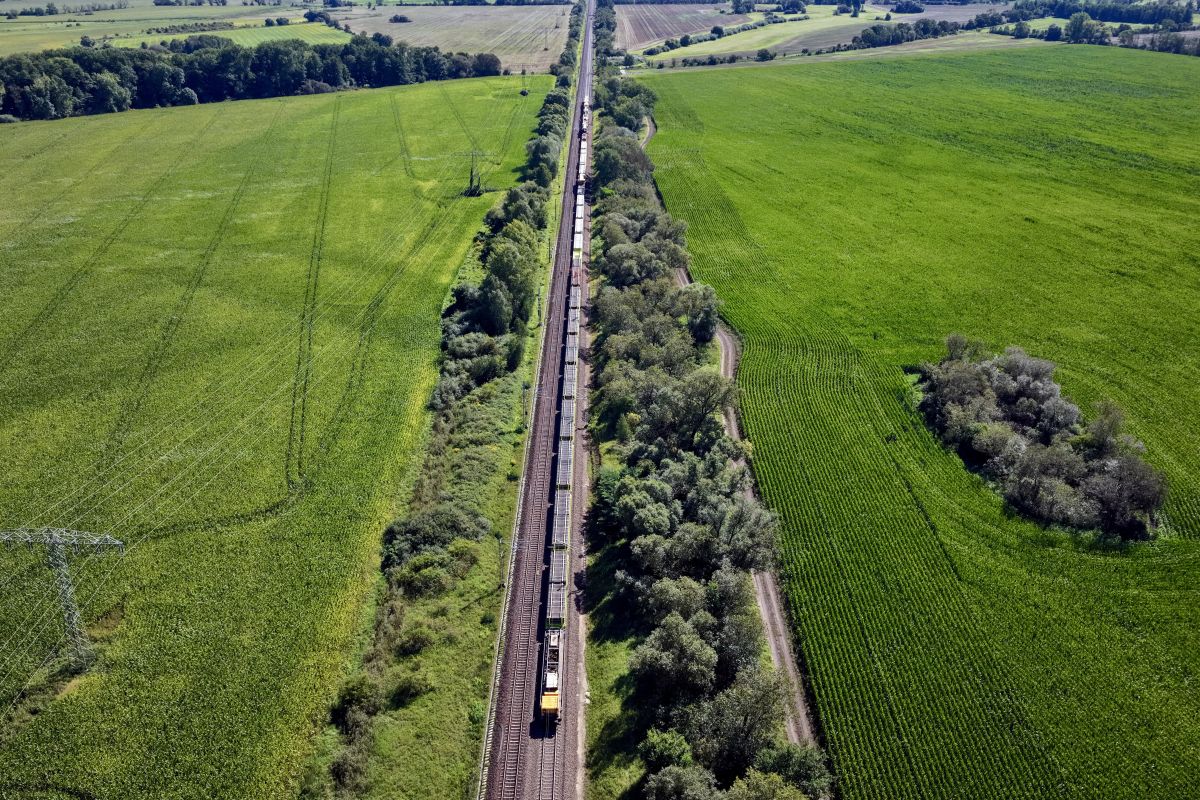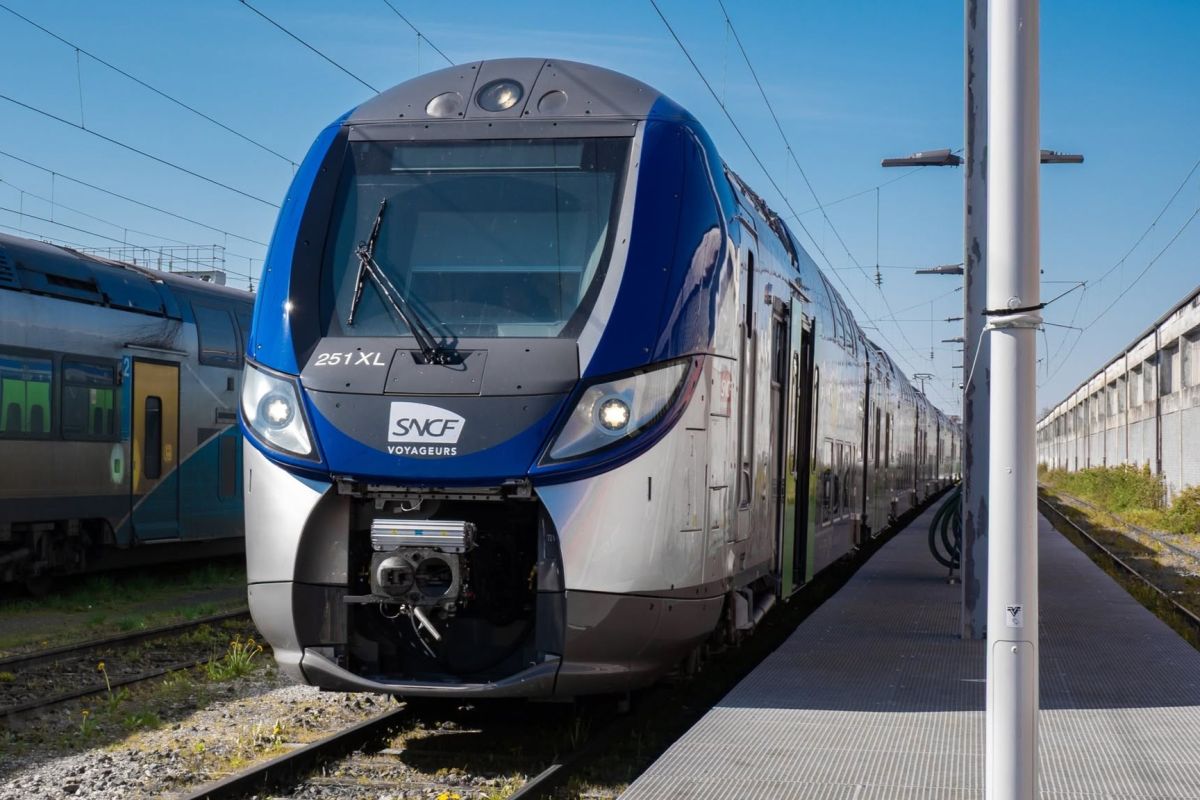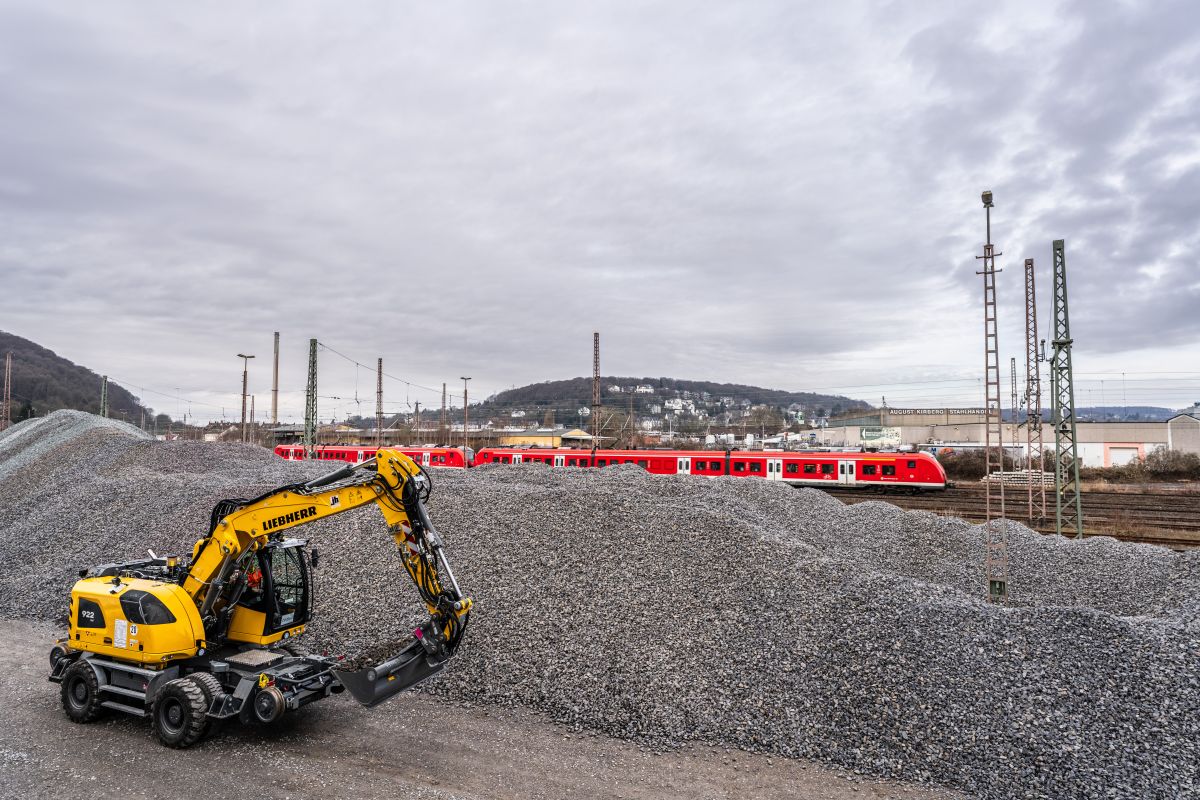
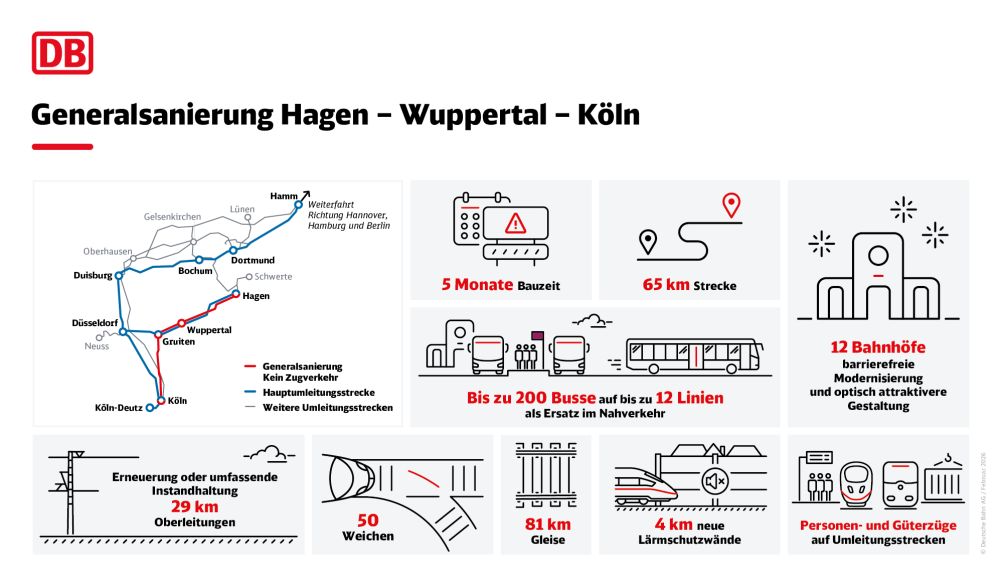
DB InfraGO has started the large-scale renewal of the Hagen – Wuppertal – Cologne corridor, one of the key rail arteries linking the Ruhr area, the Bergisches Land region and the Rhine corridor. The works form part of Germany’s national corridor modernisation programme and follow previous large-scale renewal projects on heavily used freight and passenger routes. The construction phase will run for around five months, during which long-distance and freight trains will be diverted, while regional and S-Bahn services will be partly replaced by bus services.
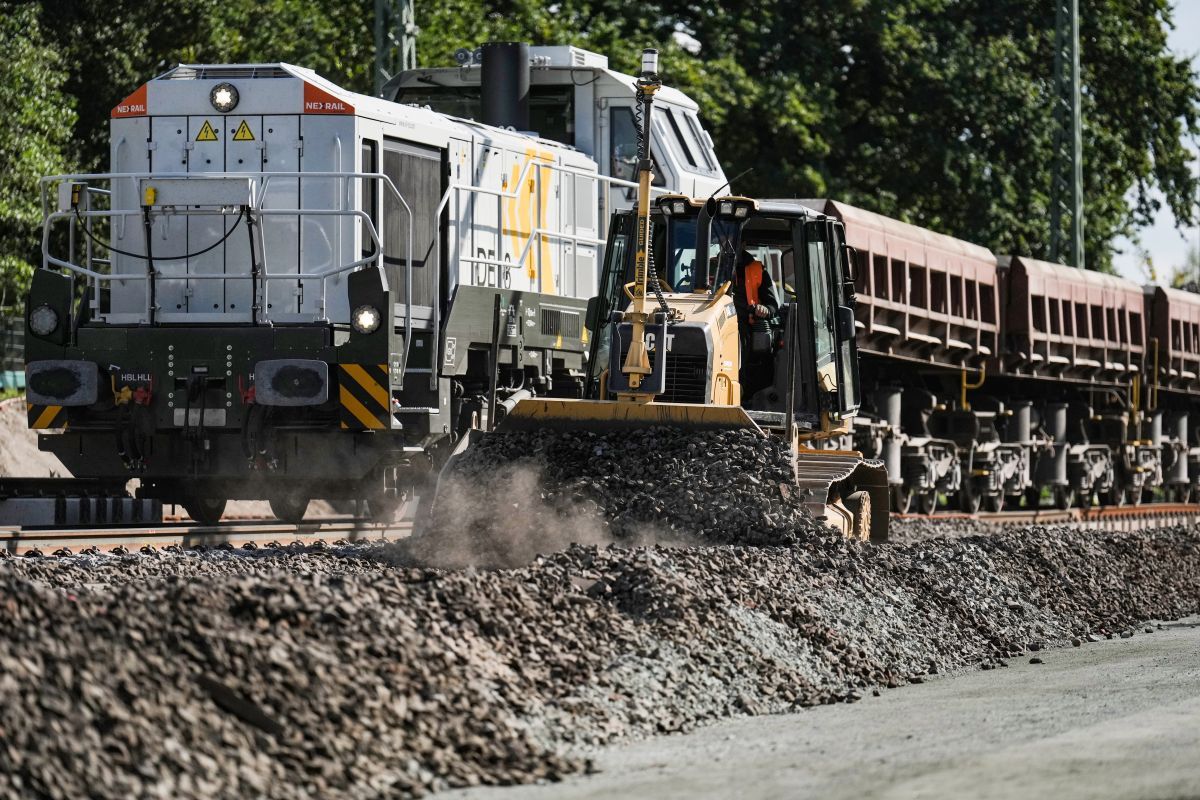
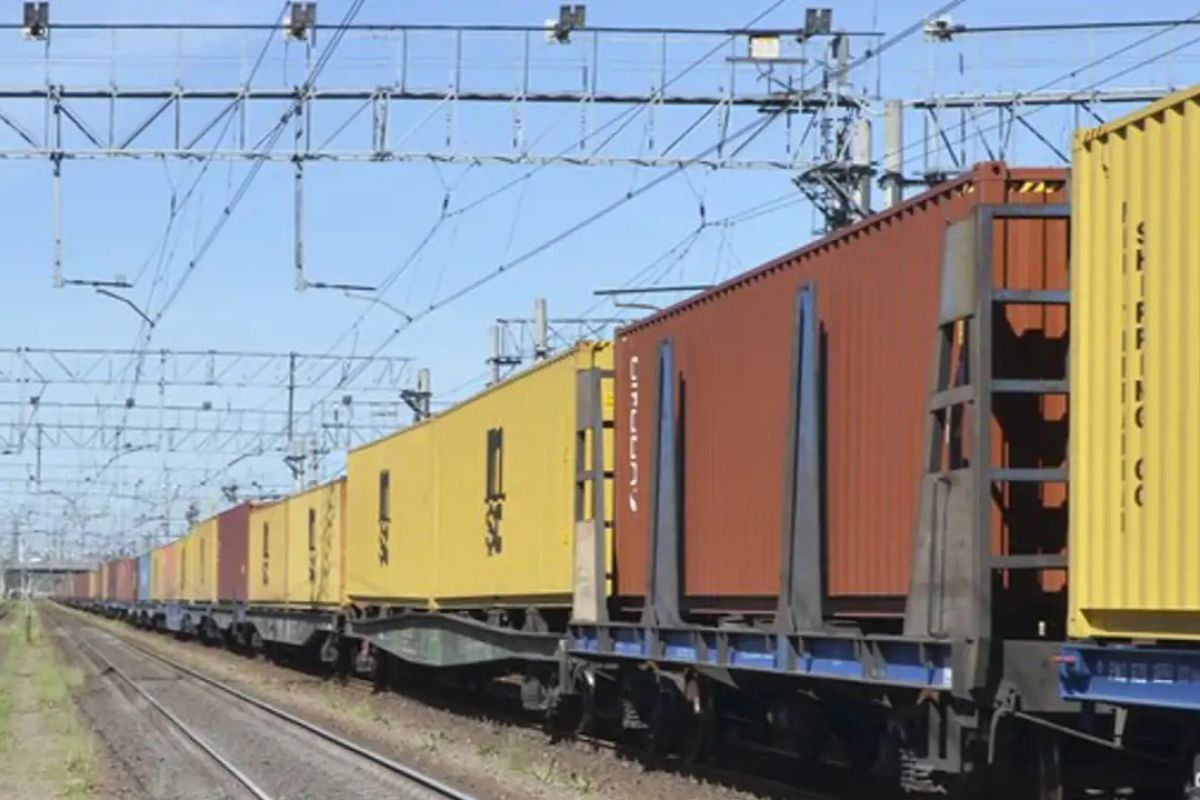
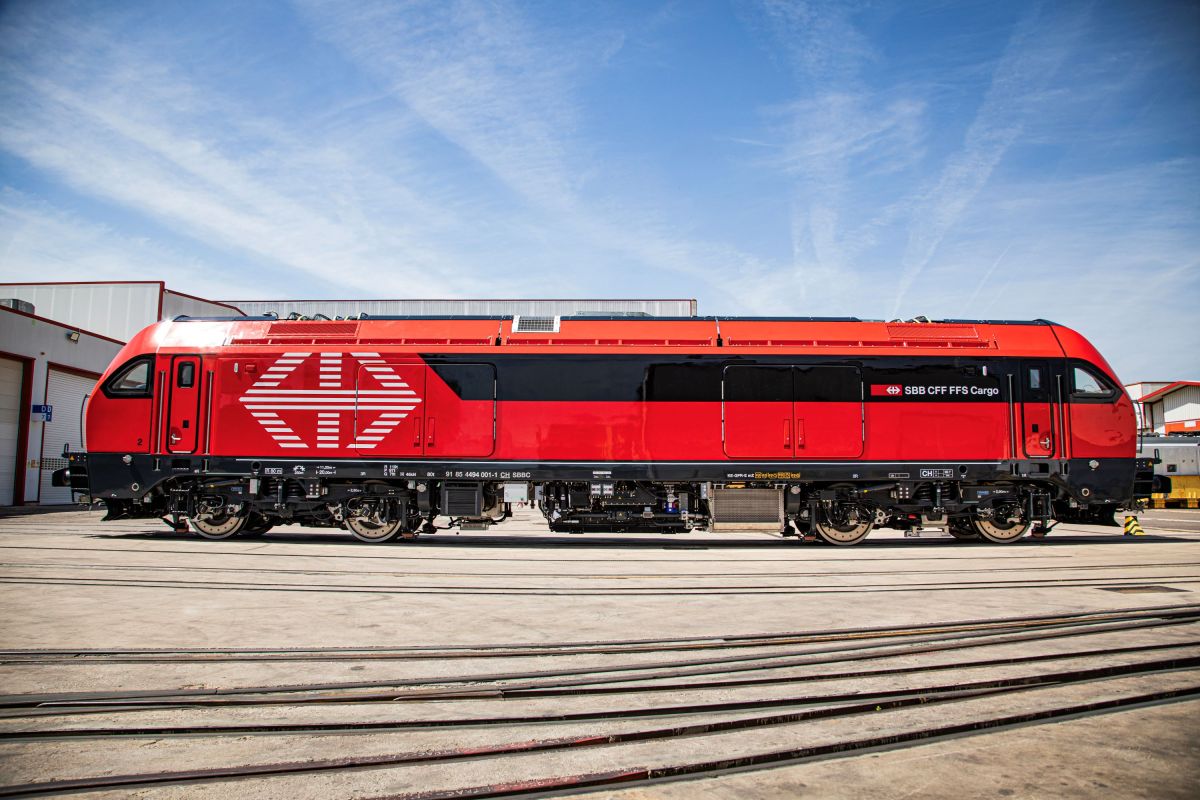
The project bundles infrastructure upgrades along the entire corridor, including track, electrification and station works. The approach is based on lessons learned from previous “general overhaul” projects, where concentrated construction phases are used to restore infrastructure reliability faster than through phased renewals. The corridor is important for both regional passenger flows and freight movements between western Germany, Benelux and southern Germany.
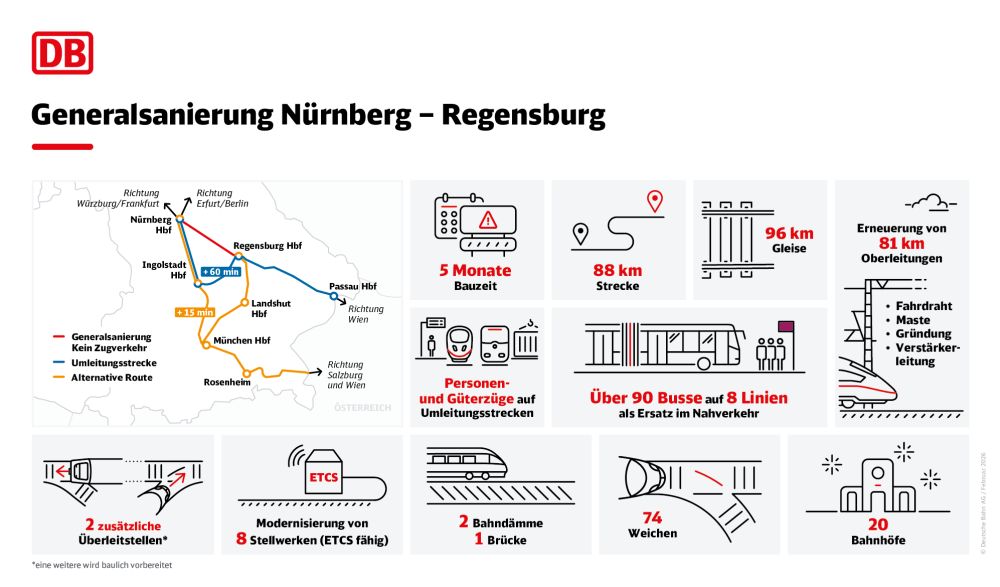
At the same time, DB InfraGO has launched a second major renewal on the Nuremberg – Regensburg corridor in Bavaria, one of the busiest rail routes in the region with more than 350 trains per day. The route is part of the Rhine–Danube European transport axis and plays a key role in rail connections between Germany and Austria. During the five-month closure period, long-distance and freight trains will be diverted, while regional passengers will be served by replacement bus services and additional capacity on alternative rail routes.
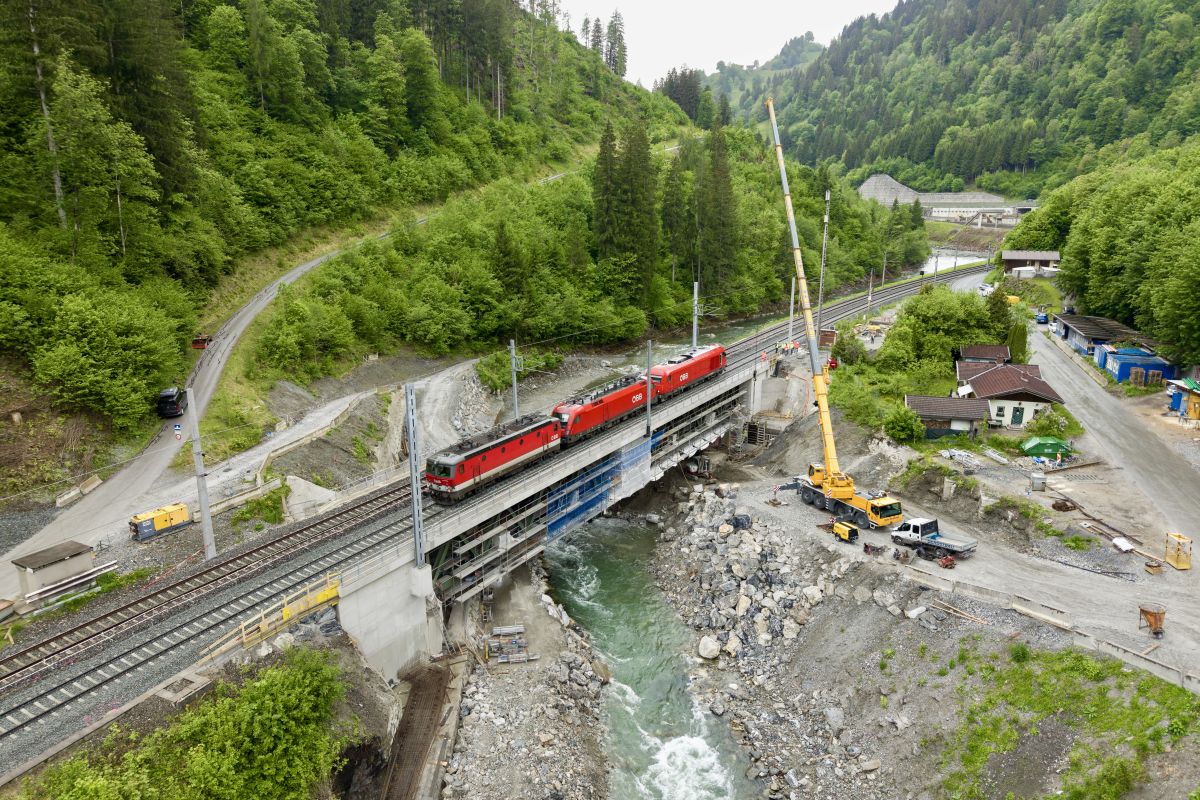
The works in Bavaria include large-scale renewal of track, overhead lines and signalling systems, alongside preparation for the rollout of ETCS train control technology. Additional crossovers and earthwork stabilisation are planned to improve operational flexibility and reduce disruption risk in the future. Station modernisation is also included, with a focus on accessibility and consistent passenger facilities standards.
Together, the two corridor projects represent part of Germany’s strategy to rebuild network resilience on heavily loaded routes, where ageing infrastructure has been a major source of delays affecting both passenger services and international freight flows.