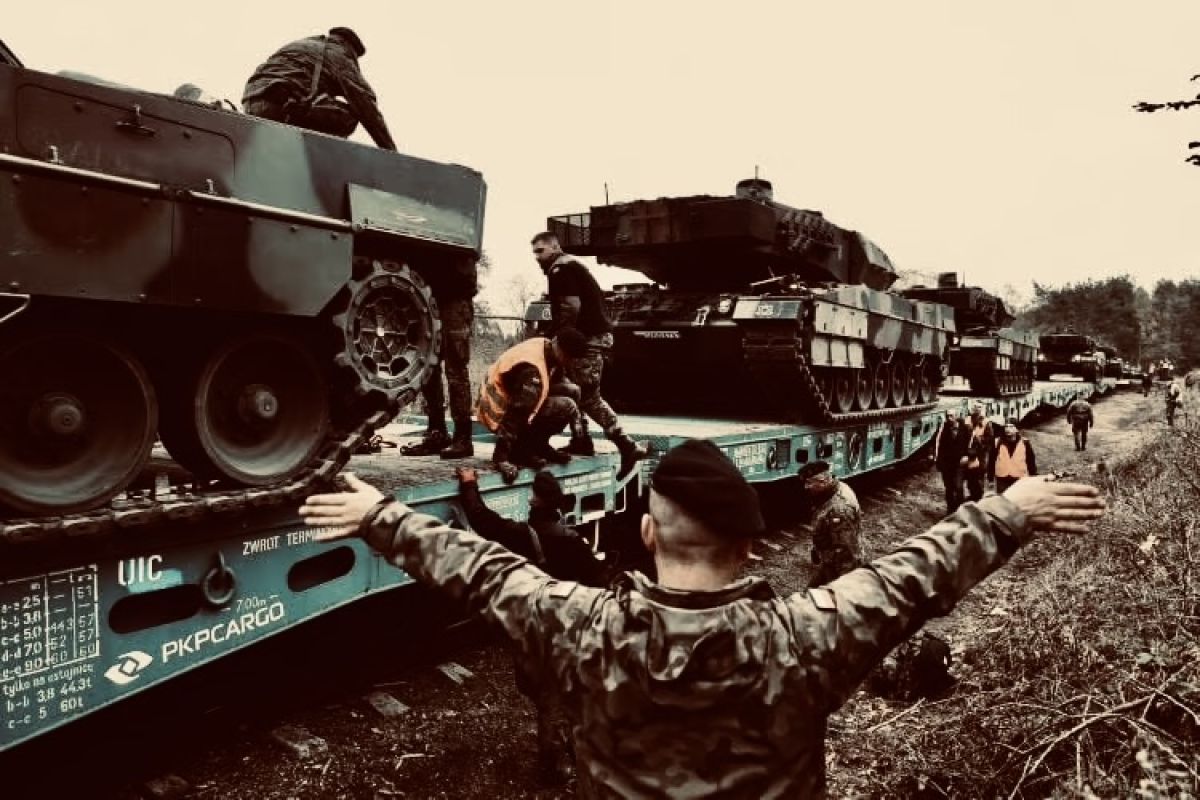
Europe’s intermodal freight sector claims to be in a strong position to play a larger role in military mobility. It proposes to use existing combined transport networks to safely transport heavy equipment, raw materials, and dangerous goods across borders.
In a new position paper published after a joint meeting of the European Parliament’s Transport (TRAN) and Security and Defence (SEDE) Committees on 1 September, the International Union for Road-Rail Combined Transport (UIRR) argued that its network of 1,000 terminals and 500 daily train departures could meet defence requirements.
"Combined Transport as the backbone of the European transport system offers the most effective means of facilitating military transports of heavy cargo by rail freight to spare the road infrastructure from wear and tear, while performing a safe, secure and reliable logistics service," said UIRR Director General Ralf-Charley Schultze.
The association stressed that intermodal terminals are secure sites for handling dangerous goods, and that Europe’s extensive wagon fleet — including flat and pocket wagons for rubber-wheeled vehicles — can accommodate a wide range of military hardware. It added that operators are able to organise ad hoc cross-border trains at short notice.
UIRR called for EU institutions to strengthen Combined Transport’s role by:
- amending the implementing regulation on dual-use infrastructure to cover transhipment equipment at terminals,
- prioritising terminal upgrades under the TEN-T Regulation, and
- recognising Combined Transport operators as “critical entities” under the EU’s Resilience Directive.
The group argues that such measures would reinforce Combined Transport as both a competitive freight option and a strategic pillar for Europe’s defence logistics.