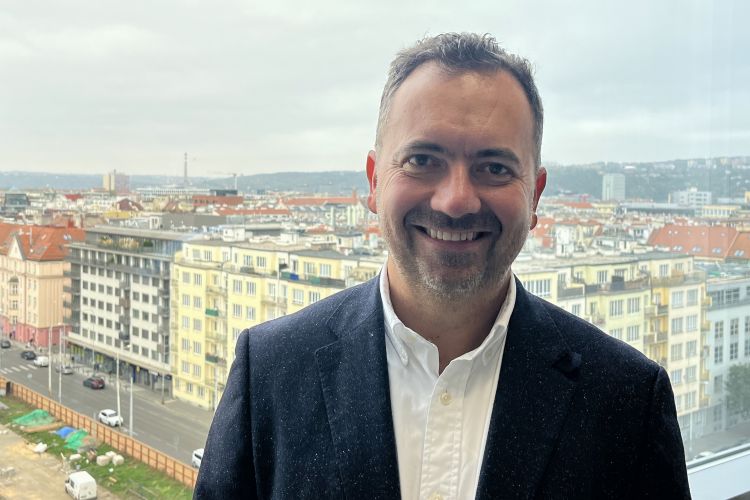
After the management studies at City University of Bratislava, Imrich Lelkes joined A.P. Moller - Maersk's Prague office in 1998, first as Sales Coordinator and later as National Sales Manager for the Czech and Slovak Republics. From 2011 to 2017 he worked for UASC (United Arab Shipping Company) as General Manager for Central Europe. After the merger of UASC with Hapag-Lloyd in 2017, he returned to A.P. Moller - Maersk where he held various positions in the management of the intermodal and product departments for the Central and South Europe areas. Since February 2024 he has been responsible for the intermodal strategy and development at ČD Cargo.
RM: You have held senior positions in intermodal logistics. How have your previous positions shaped you and influenced your current position at ČD Cargo?
Imrich Lelkes, ČD Cargo: Before joining ČD Cargo, I worked for more than 20 years in the agencies of container operators (Maersk, UASC) in Central Europe, i.e. in countries without direct access to seaports. I quickly understood that a quality solution for the landside part of the end to end transport at competitive prices can be a great advantage in the market. Therefore, I have always had to look for the best options for the customer, which is still true now that I am on the other side of the barricade. Past experience helps me to better understand the current challenges and to be more flexible in creating different transport solutions.
RM: What are the main advantages that ČD Cargo offers its customers in the field of intermodal transport compared to its competitors?
Imrich Lelkes, ČD Cargo: ČD Cargo has many years of experience in intermodal transport and has offices in a number of European countries. As a result, within the group we have the possibility to operate long routes across almost the whole of Europe. Most importantly, ČD Cargo is a financially sound company with ambitions to invest and grow beyond the Czech Republic, which is unique among former national carriers in Central Europe.
RM: How do you work with logistics partners, for example within terminals or ports, to ensure that intermodal transport runs smoothly and efficiently?
Imrich Lelkes, ČD Cargo: Terminals and seaports, as well as other participants in the logistics chain, are important partners of ours, and I dare say that we have a very good relationship with them, with communication taking place on a daily basis. If something unexpected happens, we work together to find the best solution for the end customer.
RM: Can you give us an example of a specific successful intermodal project in which ČD Cargo was involved and what were the key success factors?
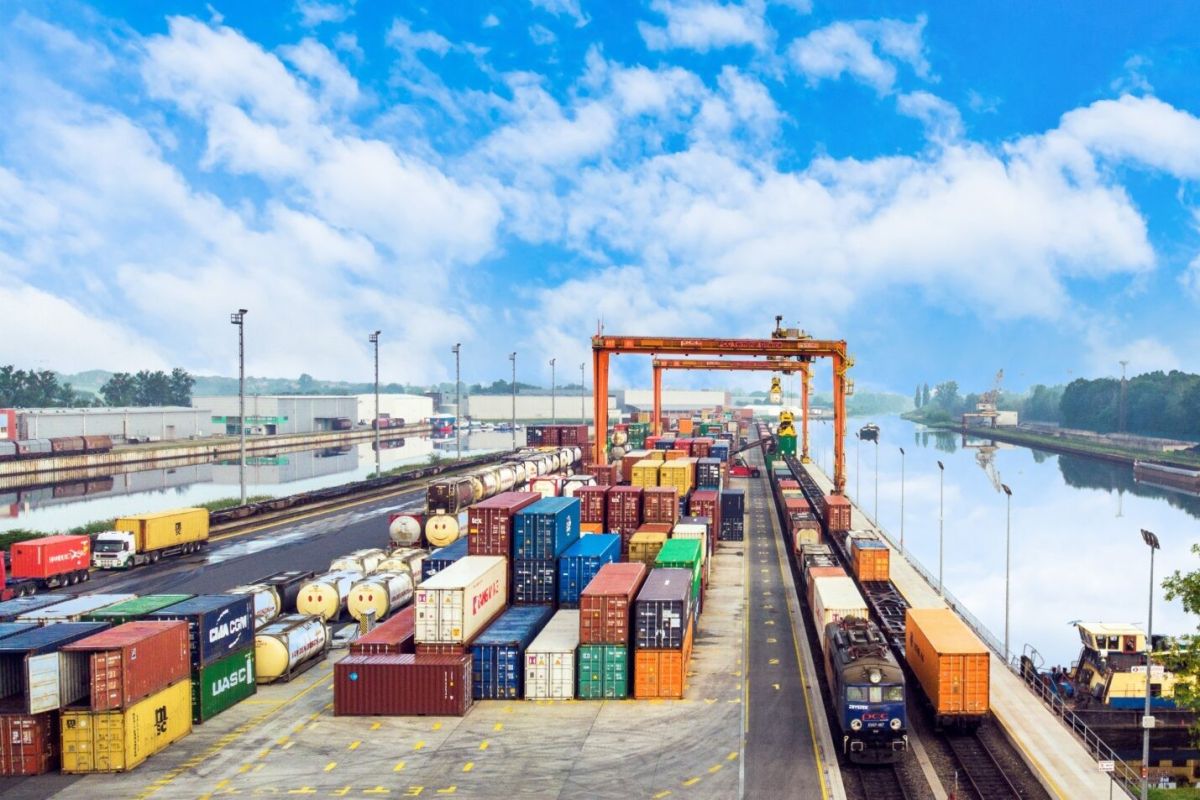
Imrich Lelkes, ČD Cargo: Let me go back in time for a moment, to 2018, when I was working as an intermodal manager at Maersk and somewhat "unexpectedly" we won a large tender for a major import customer. It was necessary to quickly arrange regular 3 trains per week from Koper in Slovenia to the terminal in Melnik, which was big news at the time. I am referring to the connection of the Adriatic port to the western part of the Czech Republic. I contacted ČD Cargo and I must say that the company managed everything perfectly and the project was very successful. Even then it was clear that ČD Cargo has professionals who understand the needs of customers very well.
RM: ČD Cargo already has interoperable Vectron locomotives for traction in the Netherlands. Which ports do you see as promising, given the fierce competition for traffic to Hamburg or Rotterdam?
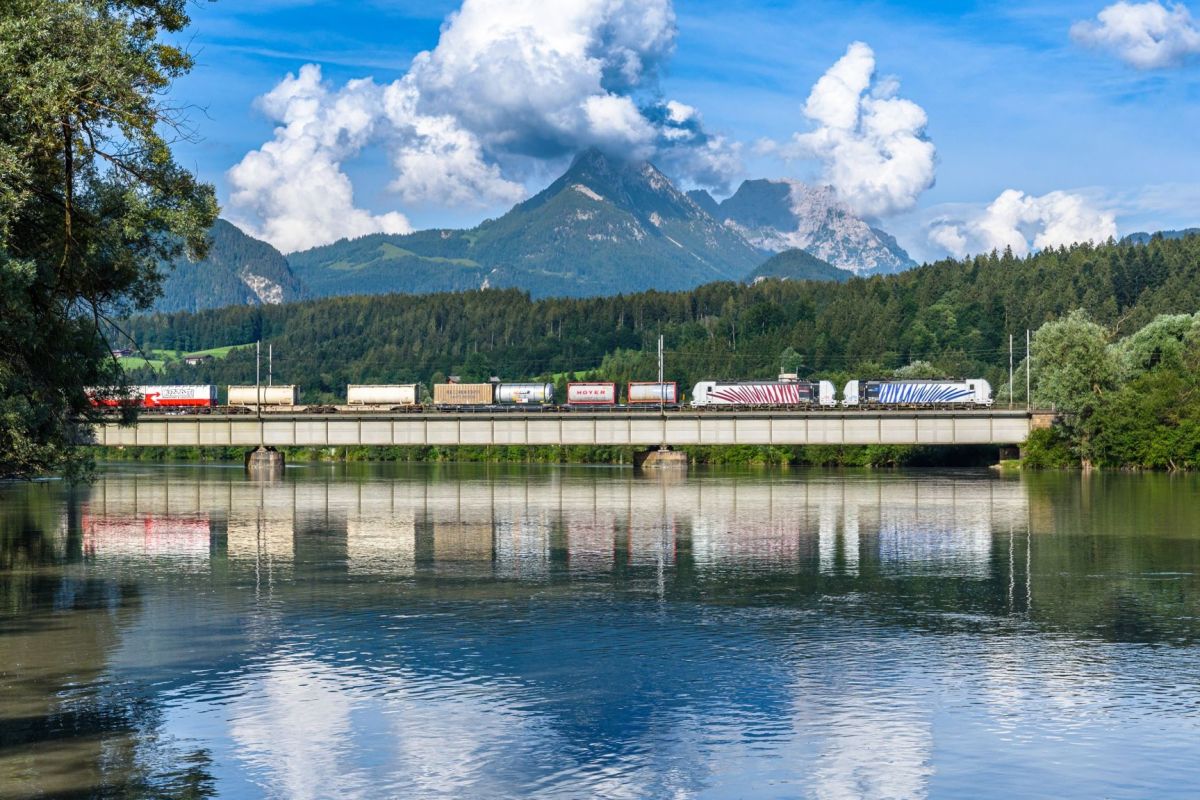
Imrich Lelkes, ČD Cargo: Expansion abroad is one of our strategic pillars and we have been working on it for a long time. And we certainly see the Benelux as a very promising area in the long term. The decision to purchase ten new locomotives capable of running in the Benelux is part of this strategy and also a response to growing customer demand. ČD Cargo wants to respond to those evolving opportunities and the increasing number of interoperable locomotives, not only Vectrons, will play an important role in the development of new products.
RM: What is the status of the planned expansion of the Lovosice terminal to four times the current TEU capacity?
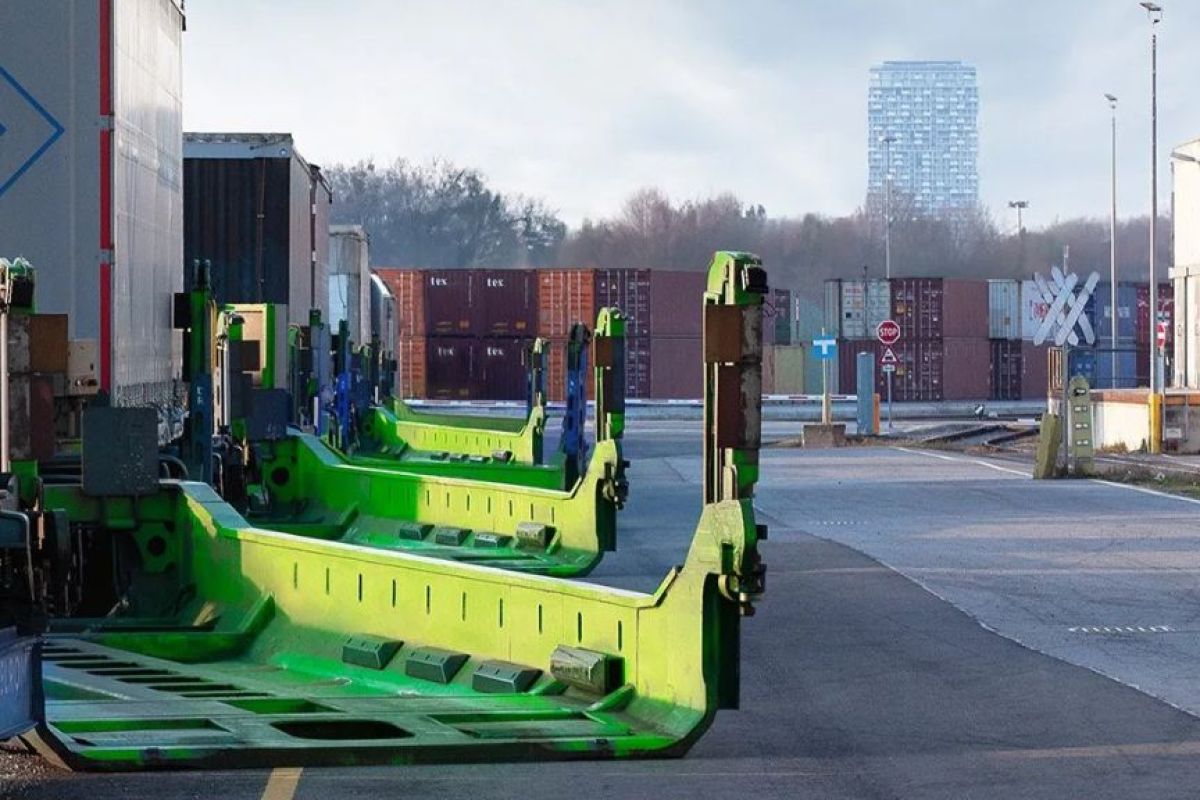
Imrich Lelkes, ČD Cargo: Negotiations are ongoing, but this is more of a medium to long-term issue. Of course, there may be a sudden demand in the market and if there is a commitment for long-term cooperation, we have to be ready to invest in capacity expansion.
RM: What is the development of transport volumes through ČD Cargo's foreign branches in Austria and Germany? Are you planning an intermodal connection to Poland?
Imrich Lelkes, ČD Cargo: I can honestly say that the branches in Austria and Germany are very successful and in the 5 years of their existence they have become respected and sought-after partners not only in their domestic markets. In Poland, we have similar situation, we are now a well established carrier there. Although mainly dedicated to the transport of solid fuels and metallurgical products, is increasingly establishing itself in other transport sectors. That is why we are also focusing on further development of the intermodal transportation in Poland. Last but not least, we feel that the Central European market is interested in further diversification of the product portfolio, also towards the Baltic Sea. I therefore believe that we will soon be offering a connection from the Czech Republic to Poland.
RM: What is the current share of intermodal transport in the total volume of goods transported by ČD Cargo and what share would you like to achieve in the coming years?
Imrich Lelkes, ČD Cargo: We currently have a share of about 13% of the turnover (including our branches in Austria and Germany) and we would like to increase it by another 2% to 3% per year. In our department, we believe that intermodal transport has the potential to grow, not only because of the increasing pressure on transport sustainability, but also because of the interest in new continental products not necessarily related to maritime transport.
RM: What is the role of digitalisation and artificial intelligence in the intermodal freight industry and how do you see it evolving?
Imrich Lelkes, ČD Cargo: Digitalisation has been around for some time already, but still has some hurdles to overcome mainly due to data privacy and regulatory alignment. The most widely used tool is the data transfer through EDI between terminals and customers, but we can mention certain tracking tools available between the various participants in the logistics chain. Recently, artificial intelligence has been introduced, which has enormous potential and I expect it to be involved in control mechanisms for documentation, the creation of loading lists for complete trains, the optimalization of routings or to increase the efficiency in dispatching.