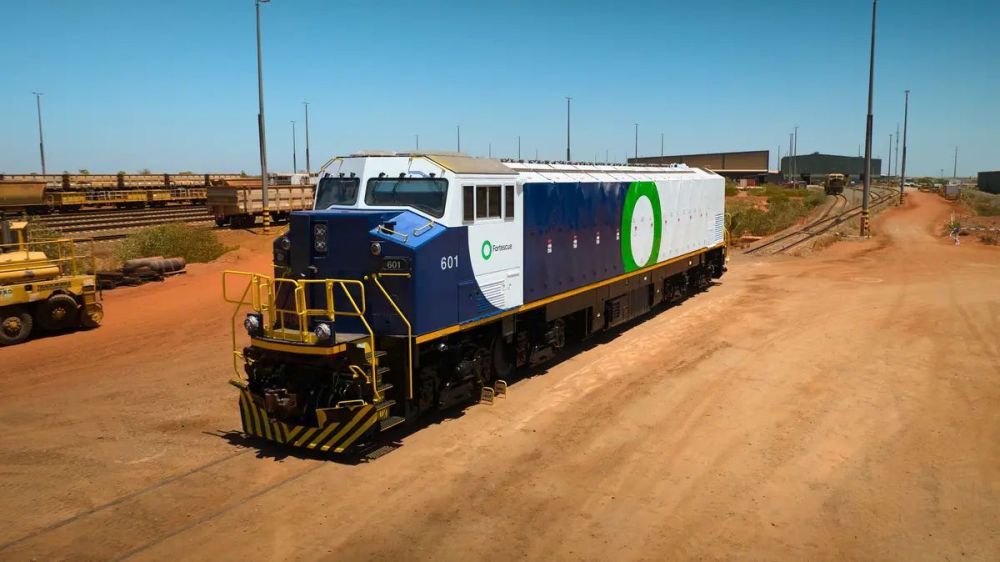
Progress Rail has delivered two EMD SD70J-BB battery-electric locomotives to Fortescue for heavy-haul iron ore operations in Western Australia.
Each locomotive provides 1,100 kN of tractive effort and carries 14.5 MWh of onboard battery capacity. According to Progress Rail, these figures make the SD70J-BB the highest-capacity battery-electric locomotive model produced to date. The units support high-power charging up to 2.8 MW and are designed to recover 40–60% of energy through regenerative braking.
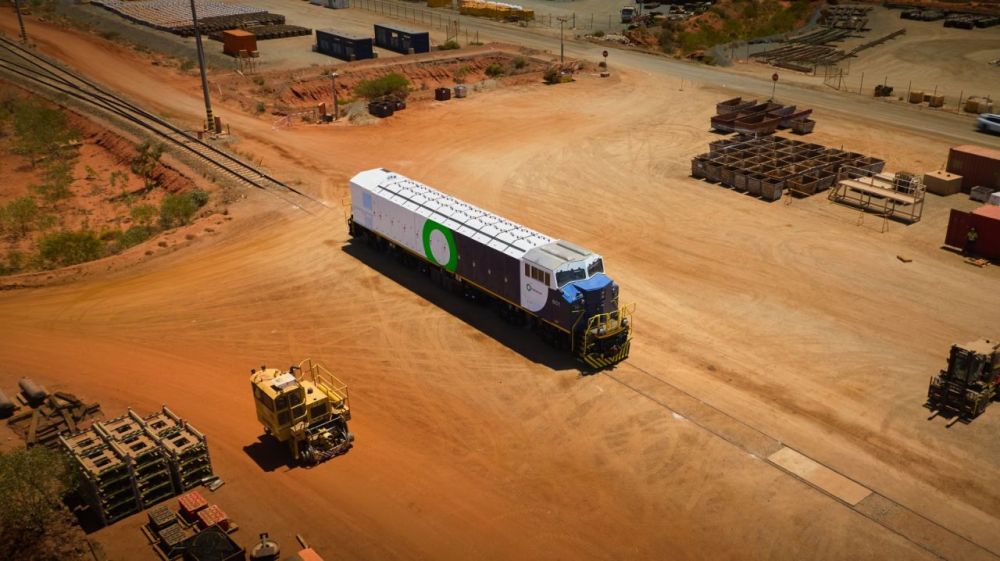
Fortescue stated that the two locomotives will together eliminate approximately one million litres of diesel consumption per year. They will be powered by renewable electricity supplied through the company’s Pilbara Energy Connect transmission network.
The locomotives are assigned to haul iron ore between Fortescue’s mine sites and port infrastructure in the Pilbara region. Commissioning follows the arrival of the units in Australia in December.
Fortescue’s Pilbara Energy Connect programme includes more than 480 km of high-voltage transmission lines linking renewable generation assets with mining operations and rail infrastructure. At North Star Junction, a 100 MW solar farm is supported by a 250 MWh battery energy storage system capable of delivering up to 50 MW for five hours.
Additional renewable projects under development include the 190 MW Cloudbreak Solar Farm, currently under construction, the approved Turner River Solar Farm with capacity of up to 644 MW, and a planned 440 MW solar installation at Solomon. Fortescue is also progressing the Nullagine Wind Project and expanding its fleet of electric mining equipment, including electric drills and excavators.
The SD70J-BB locomotives are equipped with Progress Rail’s digital systems, including Nitro ETA for train movement planning, Talos energy management and cruise control, and the UptimeIQ predictive maintenance platform. Progress Rail operates within Caterpillar’s Resource Industries segment.