Bane NOR has completed preparations for the coming winter, expanding its snow-removal capacity and refining its operational strategy for days with severe weather.
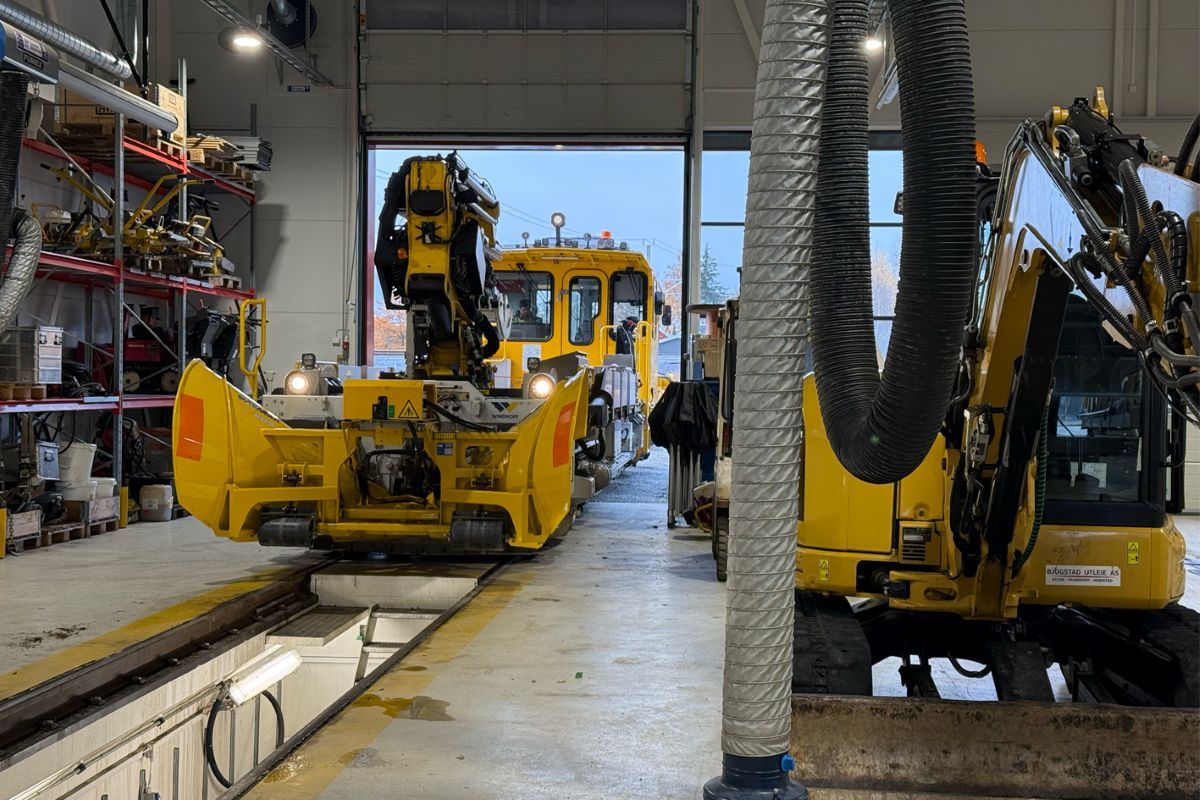
Across Norway, twelve new high-capacity snow-removal machines are now in service, supplementing existing ploughs, blowers, brushes, and track cleaners. Three Beilhack machines have been readied for the Bergen and Nordland lines, with a fourth undergoing testing. These purpose-built vehicles use one engine for traction and another for the milling unit, capable of shifting up to 14,000 tonnes of snow per hour. According to Bane NOR, these Beilhack machines are currently the only examples of their kind operating in Europe.
In Eastern Norway, Bane NOR expects between one and twelve heavy snowploughs to be active simultaneously during snowfall, supported by an expanded winter shift rota. Additional snow-clearing equipment introduced last year remains in place on the Vestfold Line and Sørlandsbanen.
Following evaluations after last winter, the organisation will again apply a revised traffic-management method during extreme conditions. Instead of suspending traffic, departures are reduced while all lines remain open. This approach was used in Eastern Norway last season and is being further developed with train operators. Fewer scheduled trains create more room for snow-clearing machines to work along the route.
Switch points remain one of the most weather-sensitive elements of the network. New heating systems have been installed on routes in Eastern Norway, Vestfold and selected locations in Southern Norway. The systems allow remote control and improved heat distribution. Digital monitoring is used to detect faults early. During extreme weather, Bane NOR plans to limit the number of switches in use and increase staffing at those that remain operational.
Freight operations at Oslo’s Alnabru terminal—central to national rail freight flows—were affected by slow clearing during several days of heavy snow last winter. For this season, Bane NOR has introduced a new priority framework for handling freight during extreme conditions, developed together with freight operators. The aim is to maintain access to and from the terminal whenever possible.
Vegetation management has also been intensified on Sørlandsbanen to reduce the risk of fallen trees disrupting traffic. This work is part of a longer-term effort to improve resilience to strong winds and shifting weather patterns.