According to the Federal Statistical Office (FSO), transport services totaled 26.1 billion tonne-kilometers, representing a 6.0% drop overall. Road freight transport decreased by 6.1%, while rail freight saw a 5.7% reduction.
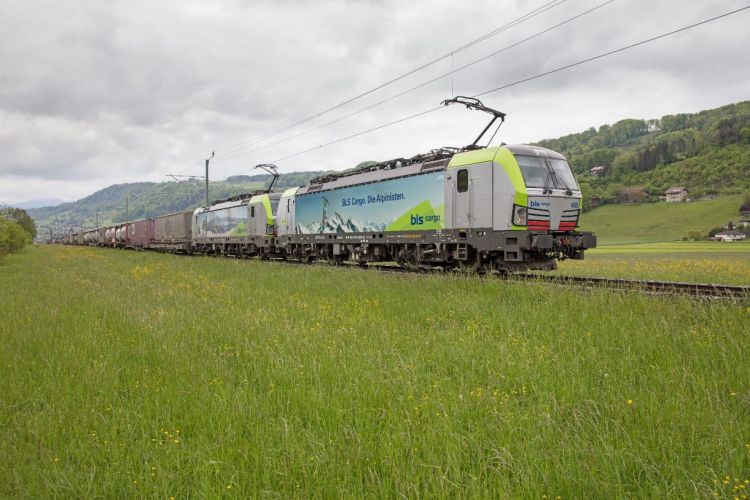
The share of rail and road in transport services remained unchanged from the previous year, standing at 38% and 62% respectively. Heavy goods traffic on roads reached its lowest level since 2007, amounting to 15.5 billion tonne-kilometers. Rail freight transport performance was also unusually low at 9.9 billion tonne-kilometers, a level not seen since 2012, excluding the pandemic-impacted year of 2020.
The decline is attributed mainly to weak economic conditions in Switzerland and across Europe. International transport services—including imports, exports, and transit—declined more sharply than domestic transport, falling by 8% on both road and rail compared to the previous year. In domestic transport, heavy road traffic recorded a 5% decrease, while rail transport within Switzerland increased by 5%, though it constitutes a relatively small portion of domestic freight movement.

In the realm of light goods vehicles, primarily delivery vans, there were approximately 431,000 registered in Switzerland in 2023, significantly outnumbering the 54,000 heavy goods vehicles. Despite this, heavy vehicles cover more kilometers per vehicle annually, averaging 32,000 km compared to 12,000 km for light vehicles. The total mileage for all light goods vehicles reached 5.1 billion vehicle kilometers, about three times that of heavy vehicles, which stood at 1.7 billion.
Between 2010 and 2023, the mileage of light road freight vehicles increased by 46%, while it remained relatively stable for heavy vehicles. This growth is largely due to a substantial increase in the number of light goods vehicles, which rose by 51% during this period compared to an 8% increase in heavy vehicles.
Light goods vehicles are predominantly used for service trips, such as tradespeople traveling to customer sites for installations or repairs, accounting for 52% of their annual mileage. Only 37% of the kilometers driven by these vehicles are for the primary purpose of transporting goods. Additionally, 9% of delivery van mileage is for private use, and 2% for passenger transport.