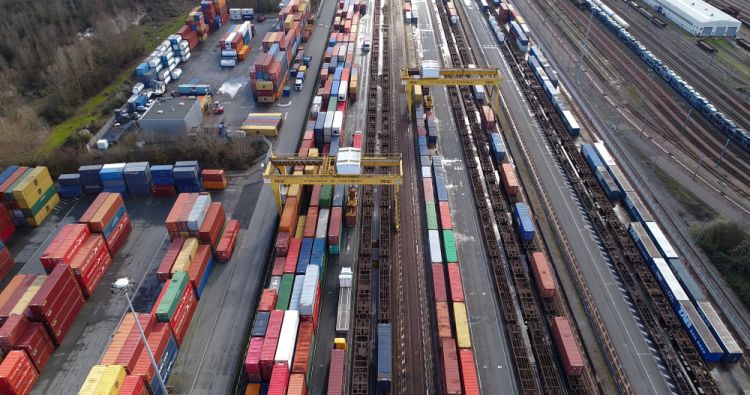
The French government has set out a detailed roadmap to expand the role of combined transport in the national logistics network, aligning with its broader ecological and energy transition goals. The newly published National Master Plan for Combined Transport, a core component of the National Strategy for Rail Freight Development, focuses on integrating rail and road modes to increase logistics efficiency, reduce carbon emissions, and support sustainable freight transport.
Key elements of this plan include:
- Increasing capacity at multimodal terminals: France’s multimodal terminals, essential to combined transport services, have been handling rising demand over the years. Current facilities are reaching operational limits due to limited investment in recent decades, leading to aging infrastructure and restrictions on handling greater volumes. The 2032 plan addresses this by detailing improvements for existing terminals and the establishment of new sites to accommodate future needs.
- Development of new terminal sites: Identifying and creating additional terminal locations is a central goal of the plan. Specific areas with potential for transshipment have been selected based on regional needs. For example, a recent regional study on Île-de-France highlighted prime locations suited for multimodal installations, enabling an expansion of the existing network to match projected demand.
- Upgrading rail infrastructure: The Master Plan calls for various measures to prepare rail facilities for increased traffic and larger loads. Strategic corridors will undergo upgrades to improve overall logistics efficiency, contributing to reduced road traffic and emissions.
- Supporting regional logistics: Beyond national projects, regional assessments will continue to play a key role in identifying and managing specific local requirements. The 2022 study on Île-de-France’s capacity has already influenced national planning, ensuring each region’s network is robust and ready for future logistics demands.
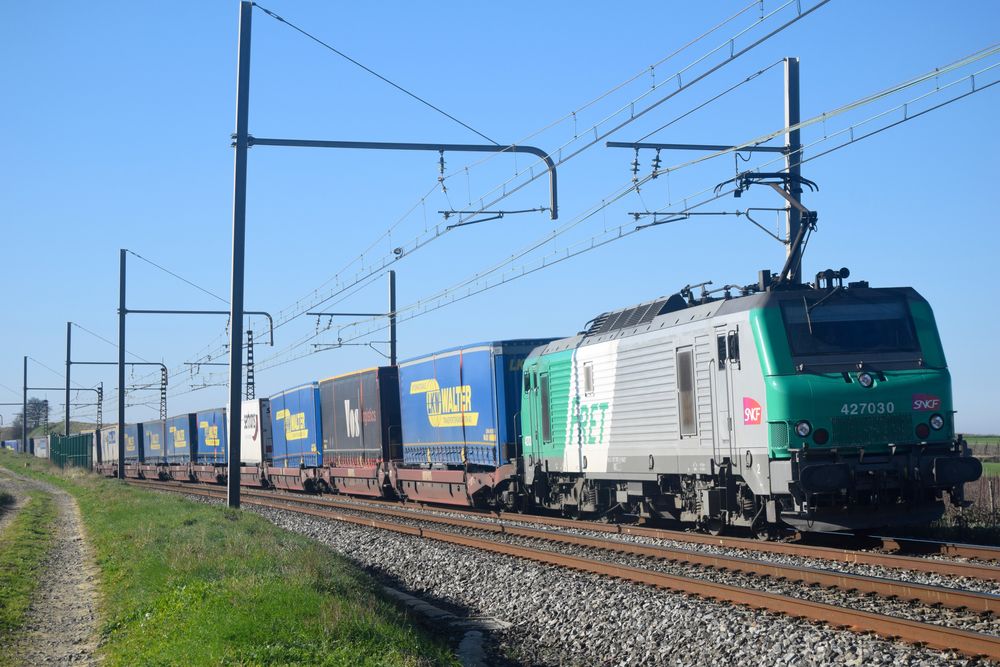
The 2032 target builds on France’s National Rail Freight Development Strategy, already underway to support climate objectives. Combined transport is projected to capture a larger share of freight transport, doubling its modal share. With ongoing government funding and regional studies, this plan aims to make combined transport a core part of France’s logistics network, supporting sustainability and energy efficiency targets.
The strategy also focuses on:
- Reducing dependence on road transport: By adding multimodal options, the plan encourages a shift from road to rail for longer-haul freight, easing road congestion and reducing fuel consumption and emissions.
- Optimizing logistics networks: Integrating road and rail within the national network aims to maximize efficiencies across modes, providing shippers with reliable and cost-effective options.
- Aligning with environmental goals: The plan contributes to France’s environmental targets, focusing on cutting greenhouse gas emissions and reducing pollutants linked to heavy road transport.