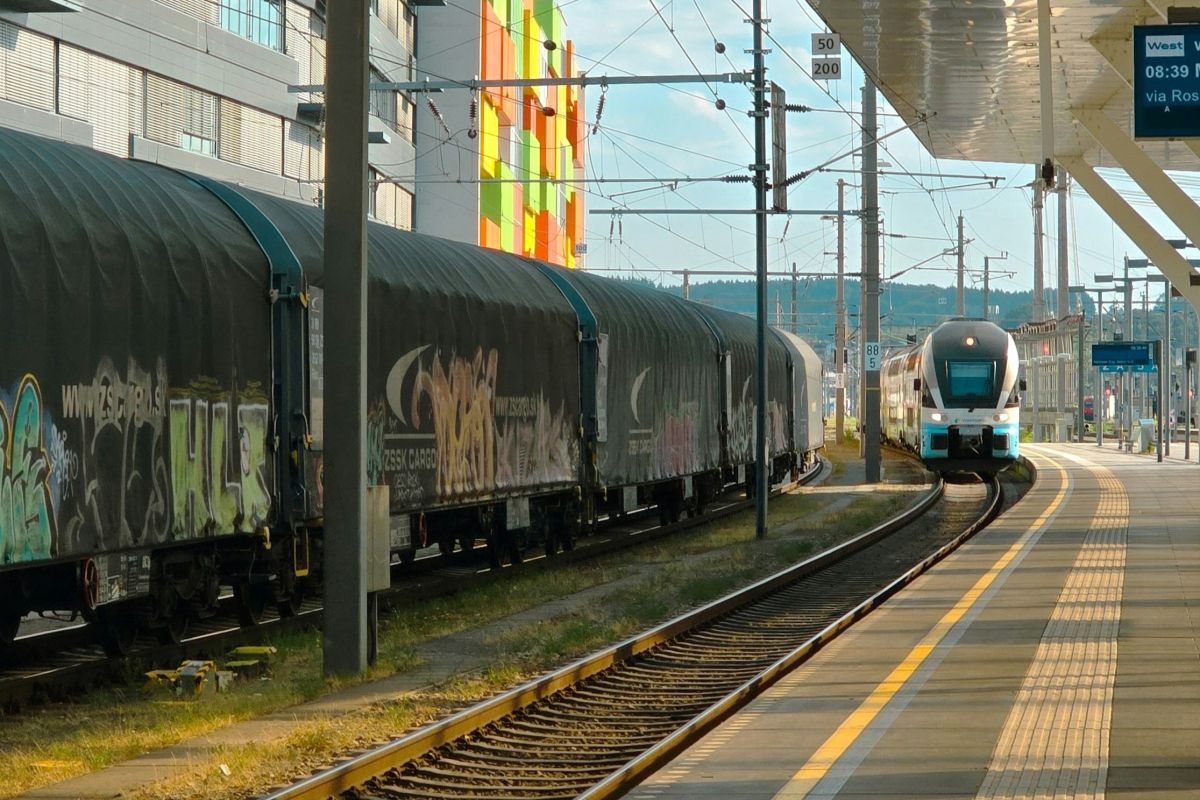
Passenger capacity rose to 138.9m passenger-train-kilometres, and freight operators outside the ÖBB Group increased their market share to around 48% by net tonne-kilometres.
Rail Cargo Austria’s freight market share fell to around 52% by net tonne-kilometres, down from 57.3% in 2024. Competitors accounted for around 48% of the overall freight market and reached 63.5% in the block train segment.
On Austria’s main transit corridors, non-ÖBB operators held the larger share of freight traffic. Their market share exceeded 60% on both the Brenner route and the Western Axis, according to Schienen-Control.
Freight performance measured in net and gross tonne-kilometres increased by just under 5% in 2025. Schienen-Control said the increase was largely caused by rerouting rather than underlying market growth.
Net tonnes transported rose for the second consecutive year to 117.6m. The figure remained slightly below the 2022 level, indicating that the increase in tonne-kilometres was partly linked to longer routes rather than higher cargo volumes.
Infrastructure works continued to affect freight capacity and operating costs. Construction on international corridors, works on the German rail network and the closure of the Tauern Railway led to detours and longer running distances, increasing pressure on rail freight competitiveness.
More than a quarter of total rail freight volume in Austria moved under ad hoc train paths booked at short notice in 2025. Among private operators, the share was above 40%, showing the effect of constrained planned capacity during construction works.
Schienen-Control said better predictability in train path allocation and stronger European coordination of infrastructure works are needed for rail freight. The EU Capacity Regulation, Regulation (EU) 2026/1184, is intended to address cross-border coordination and infrastructure capacity planning.
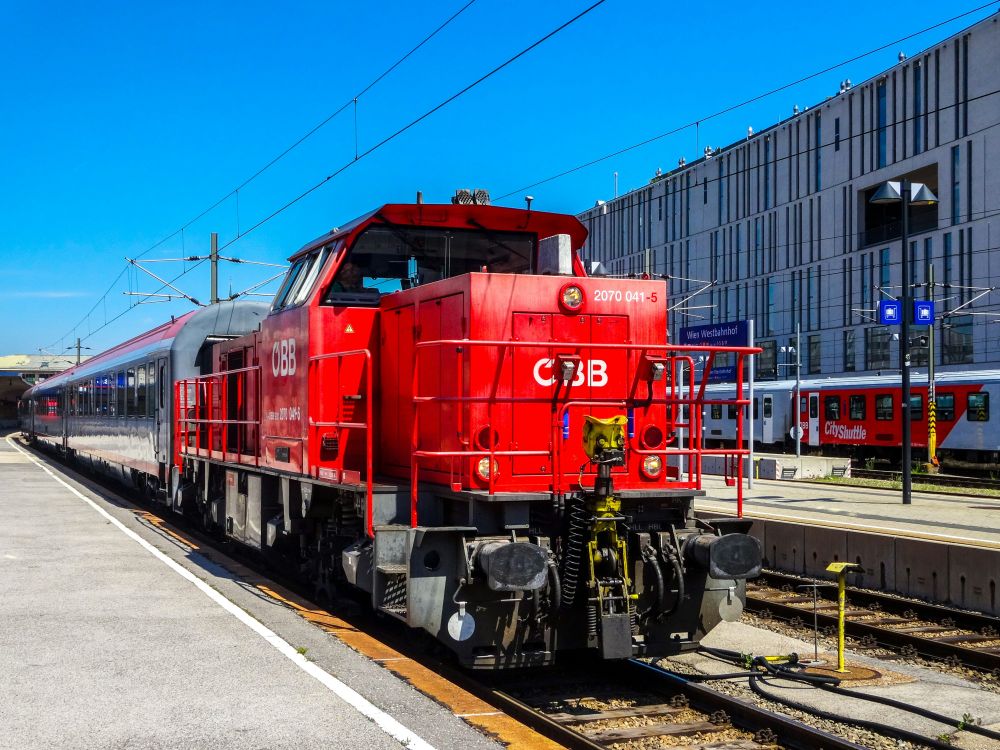
In passenger transport, total service volume reached 138.9m passenger-train-kilometres. Passenger numbers fell by 0.3% to 347.5m, which Schienen-Control attributed to the two-month summer closure of the Vienna S-Bahn main line.
Long-distance passenger volumes increased by 1%, while total passenger-kilometres rose by 0.7% to 15.1bn. Operators outside the ÖBB Group carried just under 16% of all passengers.
The full opening of the Koralm line between Graz and Klagenfurt in December 2025 added capacity to the Austrian network. Its effect on passenger demand is expected to appear mainly in 2026 figures.
At the end of 2025, 98 railway undertakings were authorised to operate trains in Austria, 11 more than a year earlier. The number authorised to use the ÖBB network reached 74, while the Austrian rail network increased by 17 km to 5,638 km, mainly due to the Koralm line opening.