Poland’s Office of Rail Transport (UTK) has published updated data on intermodal rail freight covering the period from January to September 2025. The figures point to a broadly stable market, with growth in container units offset by modest declines in weight-based indicators.
During the first three quarters of 2025, intermodal rail operators transported 2.11 million TEU, representing a 4.1% year-on-year increase. At the same time, the total mass of goods carried reached 20.5 million tonnes, while transport work amounted to 6.92 billion tonne-kilometres, both down 1.4% compared with the same period in 2024.
The third quarter of 2025 delivered the strongest quarterly result in the 2024–2025 period. Between July and September, intermodal rail handled 745,165 TEU, the highest quarterly volume recorded in the analysed timeframe. In parallel, the number of intermodal transport units reached 1.321 million, up 1.4% year-on-year after nine months.
Despite the mixed performance across indicators, UTK notes that intermodal transport continues to strengthen its position within the Polish rail freight market. The share of intermodal transport by mass increased to 12.77%, compared with 12.5% a year earlier, while its share in transport work rose to 16.69%, up from 16.01%. These figures confirm Poland’s ongoing role as a regional logistics hub, particularly for containerised flows.
According to UTK President Ignacy Góra, intermodal transport remains one of the more resilient segments of the freight market, even as the wider rail freight sector faces economic and structural pressures. UTK highlights particularly strong growth at Port of Gdańsk, where intermodal volumes increased by over 21%, underlining the importance of rail connections in serving maritime supply chains.
Market structure: leading operators
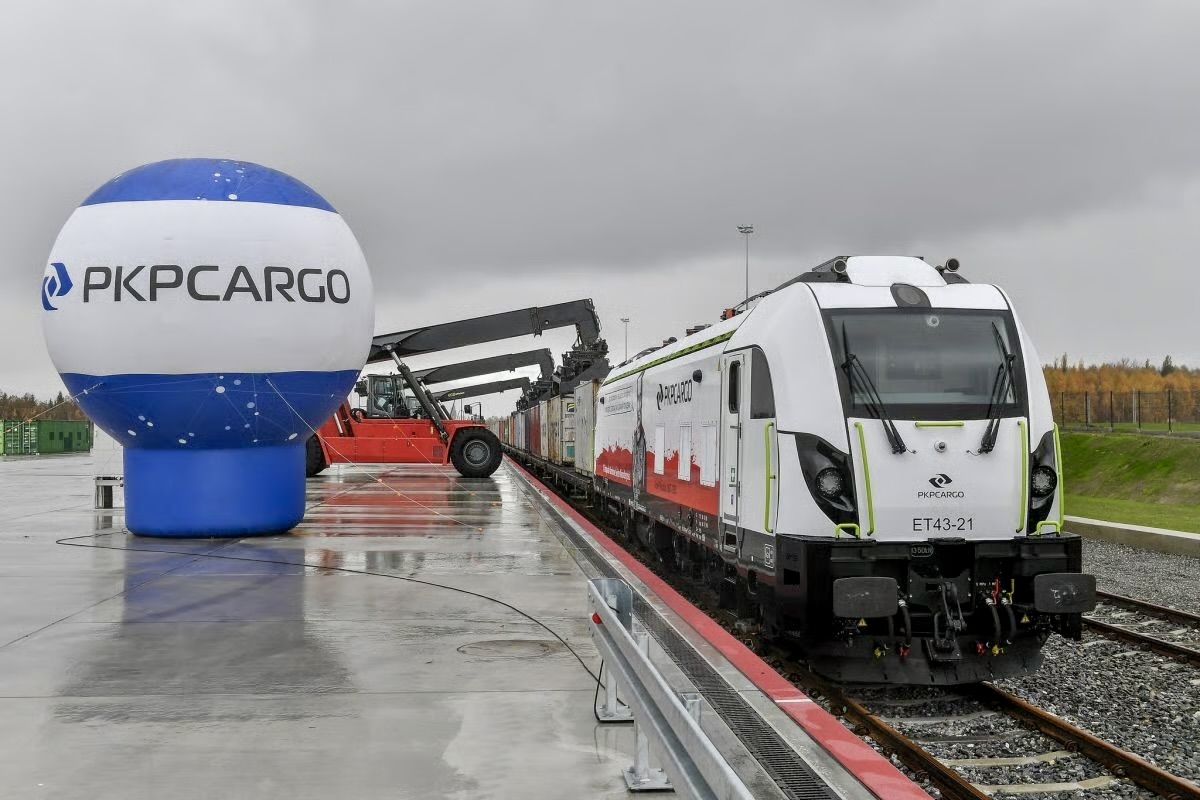
The market remains concentrated among a small group of operators. PCC Intermodal retained its leading position, accounting for 19.44% of transported mass and 21.78% of transport work. PKP CARGO ranked second, with market shares of 18.95% by mass and 18.69% by transport work, while DB Cargo held third place in transport work with a 13.61% share.
UTK concludes that while intermodal rail freight is not immune to broader market challenges, its relative stability and growing role within the rail freight mix reflect its importance for modern logistics and international supply chains.
Intermodal Rail Freight in Poland — Q1–Q3 2025
Source: UTK
- 2.11 million TEU transported (+4.1% y/y)
- Record Q3: 745,165 TEU
- Market share: 12.77% by mass; 16.69% by transport work
- Top operators: PCC Intermodal, PKP CARGO, DB Cargo