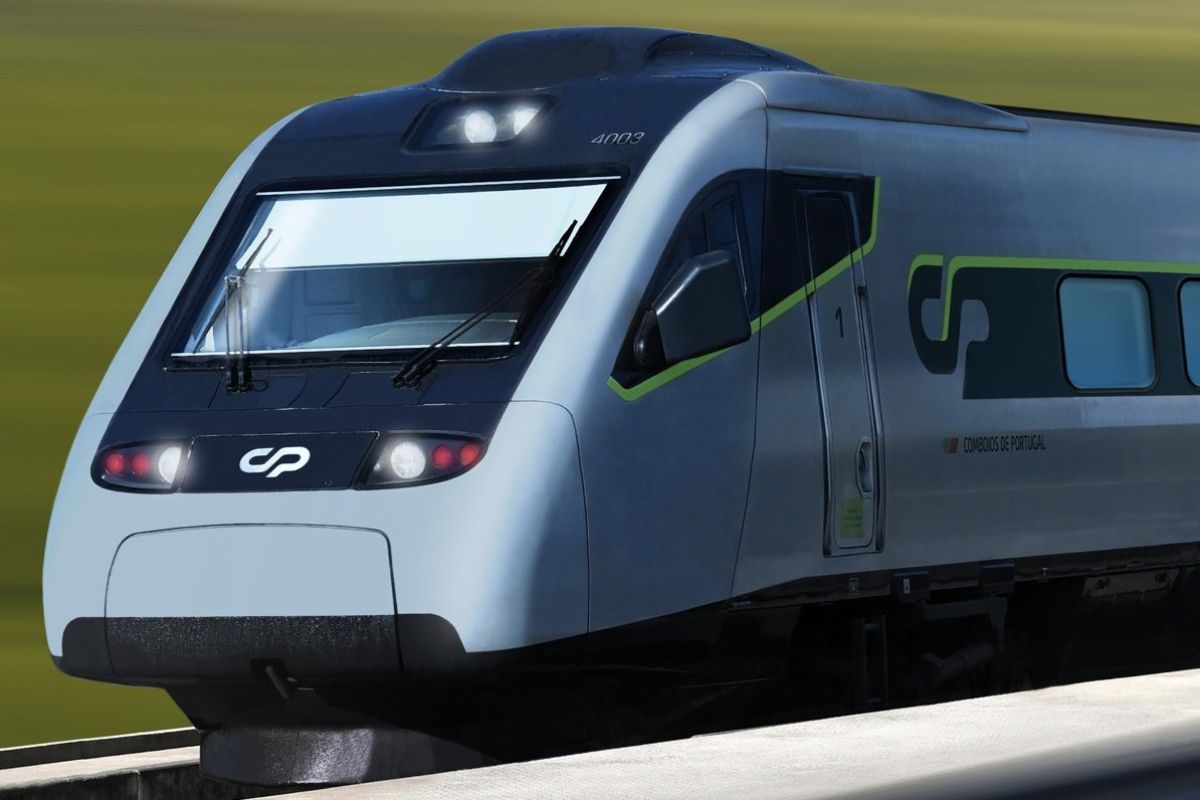
Denmark's state-owned railway operator DSB has officially launched commercial operations with its new Talgo 230 trainsets on the EuroCity route connecting Copenhagen and Hamburg.
The first service to use the new train type was EC 397, which departed Copenhagen Central Station at 14:11 CET and is scheduled to arrive in Hamburg at 19:02, making stops in Ringsted, Odense, Kolding, Padborg (DK), and Schleswig (DE). The return leg, EC 396, leaves Hamburg at 10:53 and reaches the Danish capital at 15:50.
The Talgo 230 units are designed to accommodate 492 passengers per train, a notable increase compared to the former 136-seat formations. DSB intends to deploy the new rolling stock in a progressive rollout over the coming weeks.
These loco-hauled trains are built for a commercial top speed of 200 km/h and are configured to operate in push-pull mode. Currently, a driving trailer (styrevogn) enabling this configuration is being delivered from Spain. Until then, the trains run with locomotives at both ends or require maneuvering during turnaround.
The Talgo 230 fleet for DSB consists of 16 trains. The procurement process began in 2020 when DSB signed a framework agreement valued at DKK 3.73 billion (approximately EUR 500 million), which included a firm order for eight units worth DKK 1 billion (EUR 134 million). In 2021, a supplementary order expanded passenger capacity by 10% for these eight trains. Two years later, in April 2023, DSB placed a third order worth DKK 1.37 billion (EUR 184 million) for another eight units.
The trains are built with a modular coach arrangement that includes PRM-accessible cars, first and second class sections, and flexible multi-purpose spaces with facilities for bicycles and prams. Talgo states a recoverability rate of 95% for the vehicles, with a lighter structural design aimed at reducing energy consumption.
In parallel to the Danish deployment, Talgo is pursuing approvals for the same train type in Austria, the Netherlands, and Switzerland (up to Basel), in line with plans for broader cross-border service use.
The introduction of these trains comes amid wider interest in the Talgo 230 platform, which is also at the centre of a contract for up to 65 trains recently awarded by Flix. In addition, older Talgo rolling stock is being prepared for service in the Czech Republic and Slovakia under Leo Express, owned by Spain’s Renfe.
Once the Fehmarn Belt fixed link opens, travel time on the Copenhagen–Hamburg route is expected to drop significantly, further changing the competitive landscape between rail and other modes.