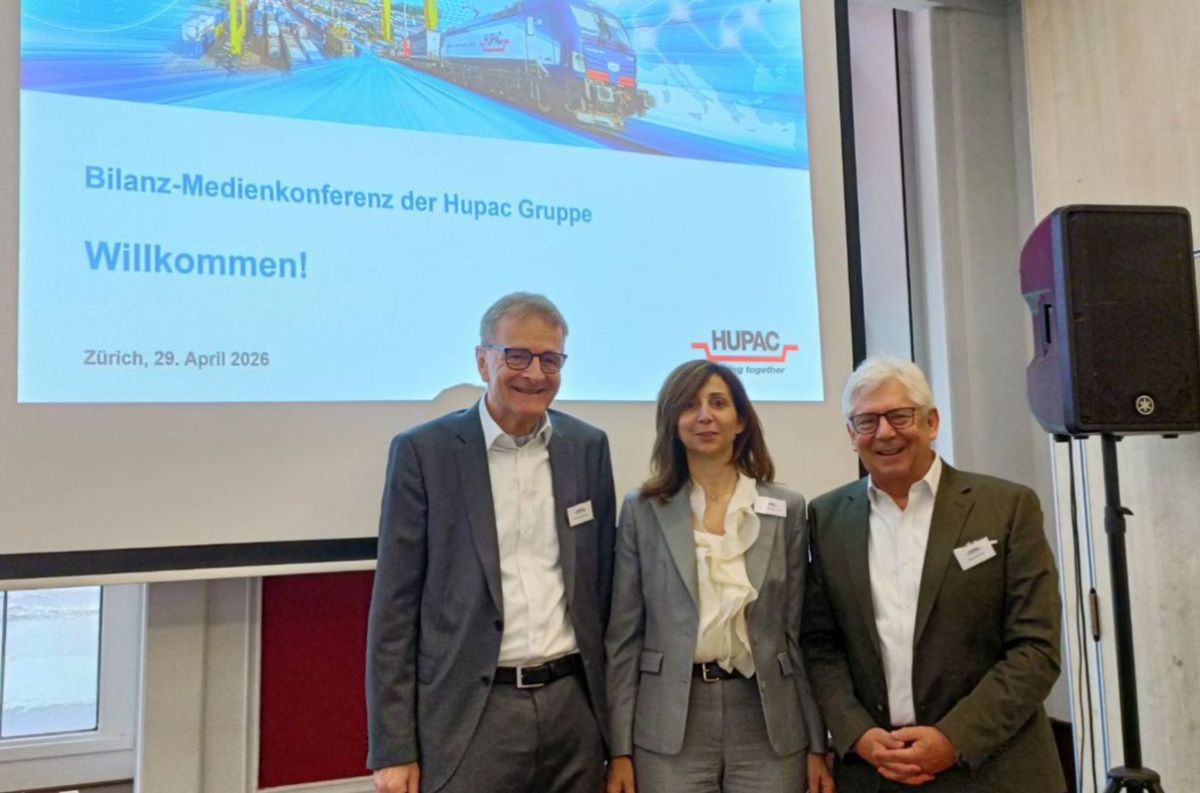
Hupac Group closed the 2025 financial year with a profit of CHF 3.5 million (approx. €3.8 million), despite continued pressure from construction works and reliability issues on Europe’s rail network.
The Swiss intermodal operator reported revenue of CHF 646 million (approx. €699 million), up 3.1% year-on-year. Profit was lower than the previous year’s CHF 9.4 million (approx. €10.2 million), but Hupac said measures to protect earnings helped keep the group result positive in a difficult market environment.
In total, the company transported around 975,000 road consignments, equal to 1.85 million TEUs, in combined road-rail and maritime hinterland transport. The core business of transalpine traffic through Switzerland grew by 4.5% to around 560,000 consignments, supported partly by traffic acquired on the Belgium–Italy corridor.
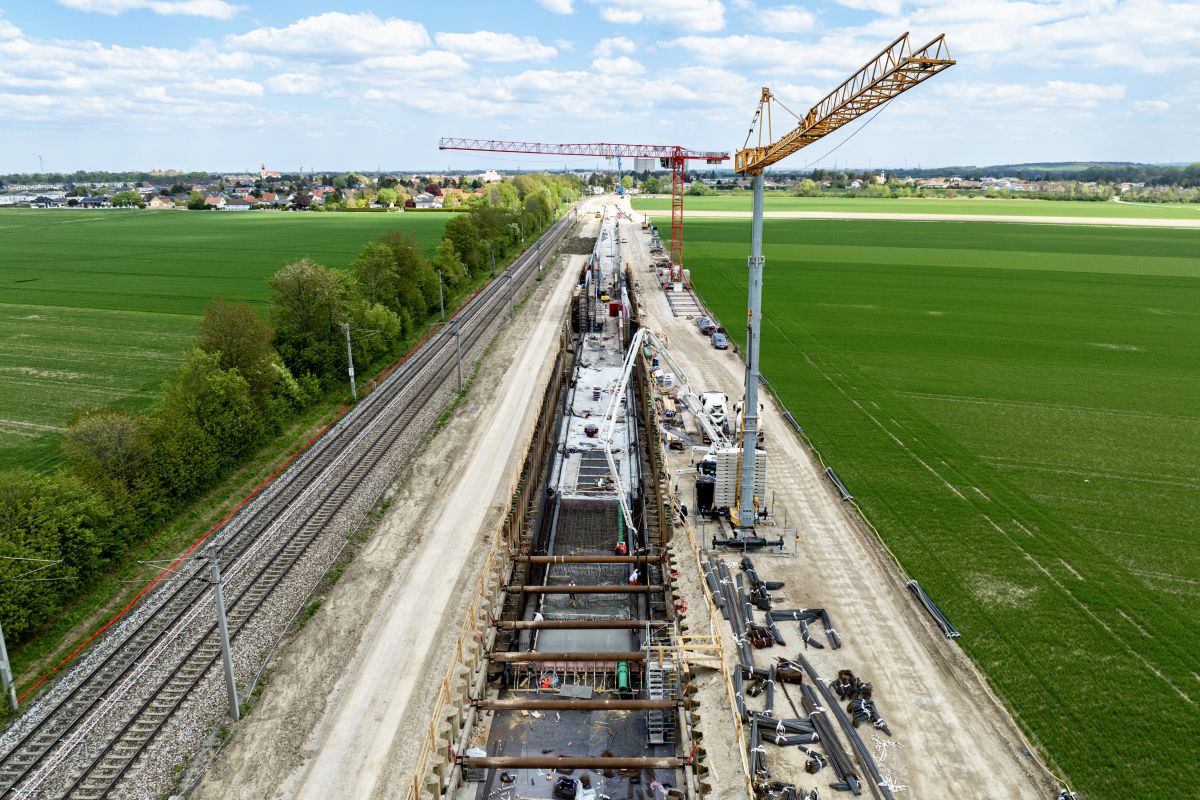
A key issue remains infrastructure performance. Hupac said extensive construction works, including temporary full closures, continued to affect rail freight reliability. This is particularly relevant on north–south corridors, where combined transport depends on predictable capacity and stable timetables.
To respond, Hupac is pushing its RadicalShift2Rail concept, concentrating traffic flows on fewer high-performance terminals and operating them with high-frequency shuttle trains. The first services were launched between Köln Nord–Busto Arsizio and Ludwigshafen–Busto Arsizio, each reaching 25 to 30 train pairs per week.
The company said early results point to better punctuality, resilience and asset productivity. Further high-frequency services are planned with the 2026 timetable change.
Hupac is also adapting after the discontinuation of the Rolling Highway at the end of 2025. New and strengthened services, including Duisburg–Novara and an expanded Basel–Busto Arsizio connection, are intended to keep part of that traffic on rail through unaccompanied combined transport.
Looking ahead, Hupac expects the market to remain difficult in 2026 and 2027, mainly due to continued works on key corridors. A more favourable growth outlook is expected from 2029, once major construction works on the Rhine-Alpine corridor and in northern Italy are completed.
The company is preparing for that phase through investments in terminals, including Piacenza, opened in 2025, and Milano Smistamento, planned for 2027. It is also expanding westwards, with the launch of Terminal Barcelona Combiconnect in early 2026, aiming to link the Iberian Peninsula more closely with the European intermodal network.