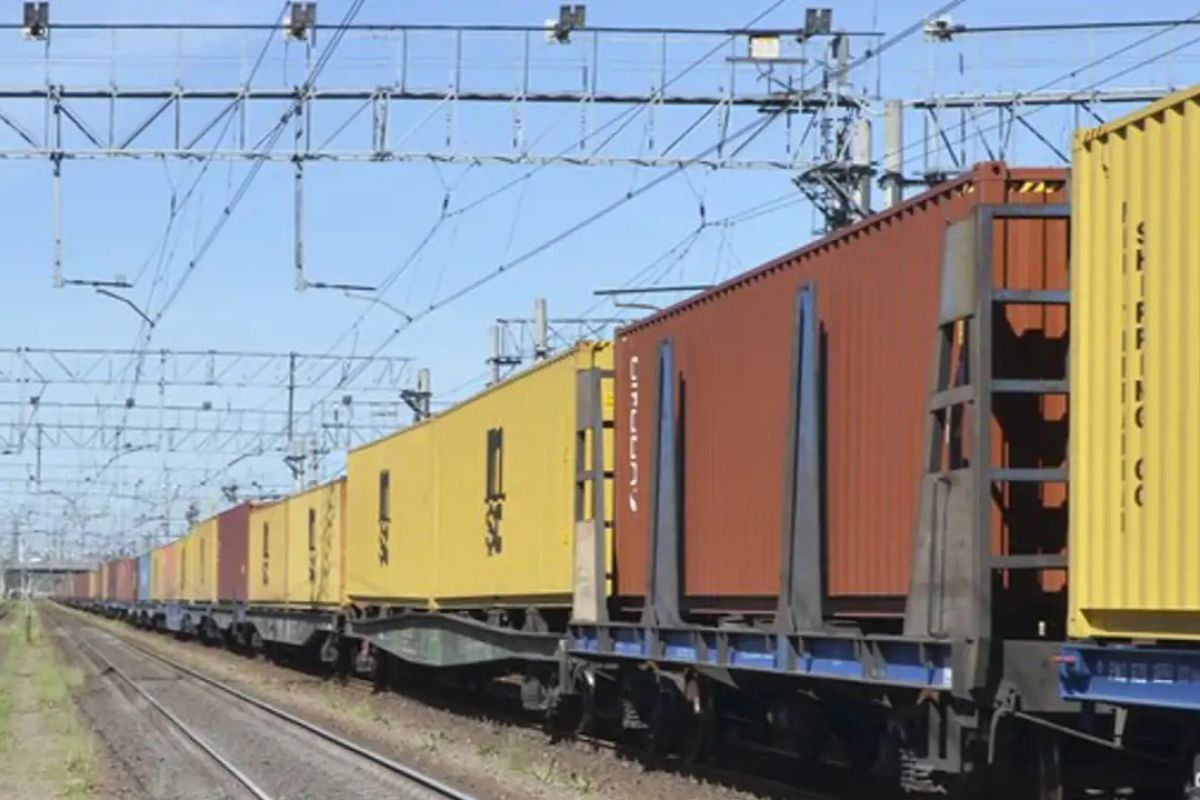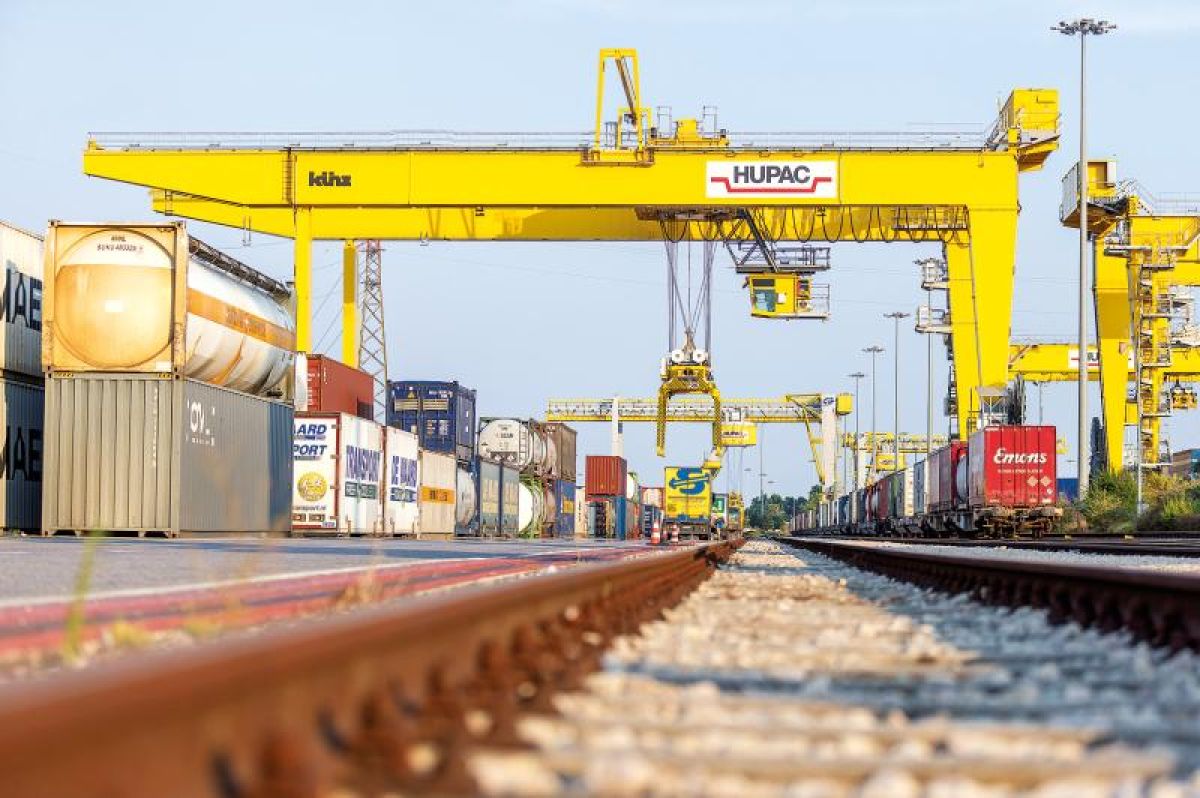
Hupac transported around 975,000 road consignments in combined road/rail transport in 2025, an increase of 4.3% year on year, allowing the Swiss intermodal operator to maintain its leading position on Europe’s main freight corridors despite continued infrastructure disruption.
In total, the group handled the equivalent of 1.853 million TEUs across combined road/rail and maritime hinterland transport. Growth was recorded particularly in Hupac’s core transalpine business through Switzerland, where volumes rose by 4.5%. However, the company noted that part of this increase was linked to acquired traffic on the Belgium–Italy axis, meaning underlying transalpine demand through Switzerland would otherwise have declined for a second consecutive year.
"The volume development is encouraging overall, especially against the backdrop of major challenges such as the complete closure of the Rhine Valley railway line in the busy month of June," said Hans-Jörg Bertschi, Chairman of the Board of Directors. He added that Hupac continues to work on maintaining viable solutions for combined transport customers despite the difficult operating environment.
The company said 2025 was again marked by construction works, diversions and line closures across the rail network, a pattern expected to continue in 2026. Among the upcoming pressure points are a two-week closure of the Rhine Valley line in Germany, a five-week closure between Iselle and Domodossola in Italy, and additional diversions linked to the Troisdorf–Wiesbaden route.
In response, Hupac is developing diversion concepts with its rail partners and is calling for stronger infrastructure coordination across Europe. In particular, it argues that diversion routes must offer sufficient capacity, preserve train length and profile standards, and avoid overlapping works on parallel TEN-T corridors serving the same markets.
Hupac also says it is investing in more resilient service structures. Since the beginning of the year, it has increased frequencies on key routes such as Köln Nord–Busto Arsizio and Ludwigshafen–Busto Arsizio, while also expanding its network in Spain through Terminal Barcelona Combiconnect.
"The launch of high-frequency services shows that the negative effects of delays on customers can be minimised," said CEO Michail Stahlhut. He stressed that maintaining service capacity is essential for linking industrial regions across Europe and for preserving customer confidence in combined transport.
At the same time, Hupac warned that the longer-term trend on the north–south corridor through Switzerland remains troubling. Since 2021, combined transport volumes on the axis have been in decline, and the number of truck journeys across the Alps remains well above Switzerland’s modal-shift target. The company is therefore calling for continued support for transalpine combined transport, including the preservation of operating subsidies beyond 2030.
For the wider European freight market, Hupac’s 2025 results highlight a dual reality: intermodal transport can still grow under pressure, but long-term expansion remains closely tied to the availability, quality and coordination of rail infrastructure across major cross-border corridors.