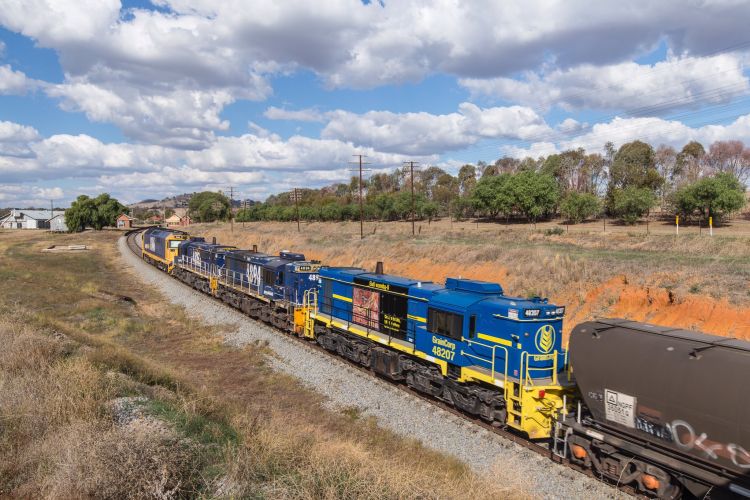
In a major submission to the NSW Government's freight policy reform scheme, the Australasian Railway Association (ARA) said increasing rail's mode share is critical to meeting future demand. There would be far-reaching benefits to the economy and the community if 30 per cent of NSW freight was shifted to rail.
The need to re-establish the mothballed Bureau of Freight Statistics to enable regular, public reporting by NSW agencies on freight performance and progress in delivering the renewed freight strategy is among the ARA's 44 recommendations. The submission also states that the current passenger priority and peak hour restrictions on the metropolitan shared rail network are “challenging and excessively restrictive”.
NSW Ports figures show that despite numerous strategies to increase mode share, only 17 per cent of freight arriving at the port for export is transported by rail. ARA research shows that only two per cent of freight on Australia's busiest corridor between Melbourne and Sydney is carried by rail.
“The poor utilisation of rail in the NSW freight task has been an issue for decades and strategies to date have not resulted in rail being any more competitive in the containerised market,” commented ARA CEO Caroline Wilkie.
ARA research shows that a 10% modal shift from road to rail between Australia's major metropolitan areas will reduce social costs, accidents and health costs from emissions, for an estimated total benefit of over $700m annually.
“For NSW to play its part in reaching net zero emissions targets, it is essential we ease pressure on the state’s congested roads and enable more freight to travel by rail, which is 16 times less carbon intensive than road freight,” said Wilkie.