The 78-page proposal, dated April 2026 and authored by Fabián Figueroa under the auspices of the Instituto Ferroviario de Chile, defines objectives, modal share targets and governance reforms for implementation through 2050.
The policy calls for increasing rail investment from 4% to at least 16% of total infrastructure spending, raising annual railway expenditure from 0.06% of GDP to between 0.10% and 0.40%, in line with OECD benchmarks. It proposes that overall infrastructure investment should exceed 4% of GDP, with a target of 6.5%.
Freight targets: 30% port modal share, combined transport growth
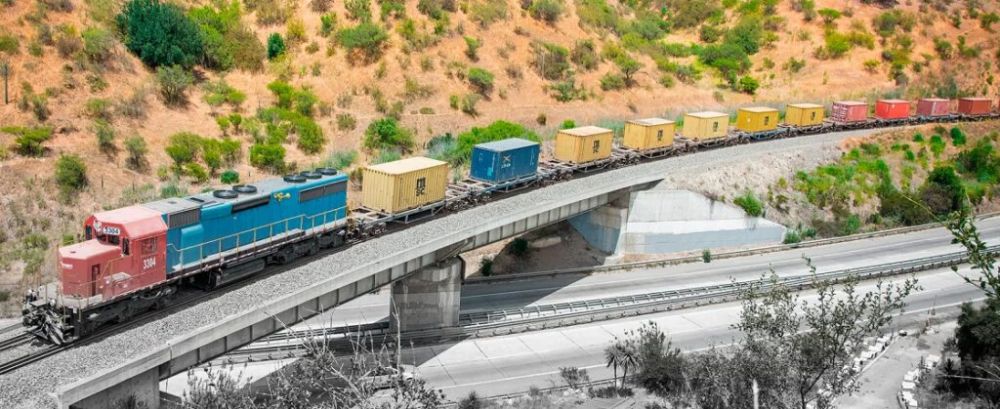
For freight, the document sets a goal of shifting around 50% of gross tonne-kilometres to high-efficiency modes, including rail and maritime cabotage, and achieving at least a 30% rail modal share of net tonnes handled at state-owned ports.
It also prioritises the development of combined rail–road transport, citing cost differentials of five to eight times per tonne-kilometre in favour of rail on mainline sections. A model example in the document shows that on a 1,000 km corridor, rail at CLP 16 per tonne-km would cost CLP 16,000 per tonne versus CLP 100,000 by truck, implying savings of up to 84%; a combined 800 km rail / 200 km road solution would reduce costs by 67% compared with all-road transport.
The policy further proposes enabling at least two fully rail-based international connections by 2050, subject to bilateral agreements and financing arrangements.
Passenger objectives: 600 km high-standard corridor
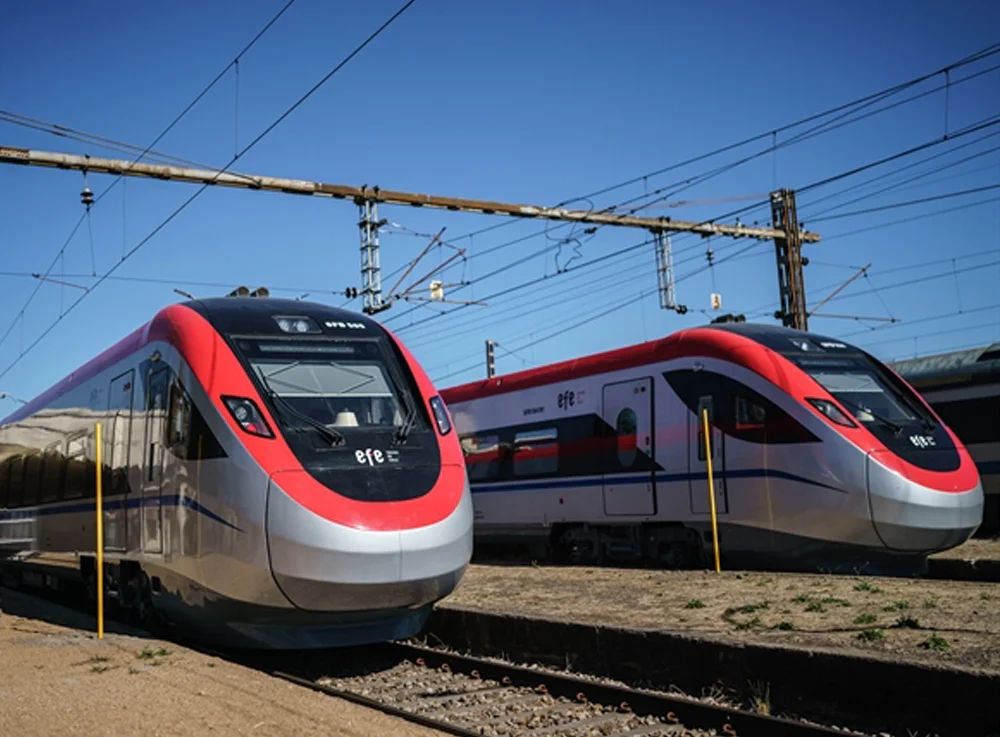
For passenger services, the strategy targets a minimum 16% modal share for urban rail (metro, tram or funicular) and 16% for suburban rail in metropolitan areas with more than 400,000 inhabitants, including Antofagasta, La Serena–Coquimbo, Valparaíso, Concepción and Temuco.
In Greater Santiago, the document sets a desired combined urban and suburban rail modal share approaching 50%.
A central infrastructure proposal is the development of a high-standard corridor of approximately 600 km linking Valparaíso, Santiago, Rancagua, Talca, Chillán and Concepción, covering around 75% of the national population. The policy calls for studying and potentially implementing high-speed rail on this axis by 2050, with a target interurban modal share of at least 30% and a desirable level close to 50%.
Governance reform and evaluation changes
Institutionally, the proposal recommends creating a Ministry of Mobility and Critical Infrastructure, a national rail authority and corridor-based planning mechanisms. It identifies current evaluation procedures under Chile’s National Investment System as a constraint, noting that projects are assessed individually rather than at network level and that externalities such as emissions and territorial integration are not systematically included.
The policy framework is structured around eight strategic lines, including rail as the backbone of public transport, integration into logistics corridors, high-performance services, institutional modernisation, new planning and financing mechanisms, resilient infrastructure, urban integration and development of domestic rail industry and skills.
The document positions rail as critical infrastructure and frames the 2050 horizon as requiring regulatory reform within three years and implementation of integrated plans within five years of adoption.